
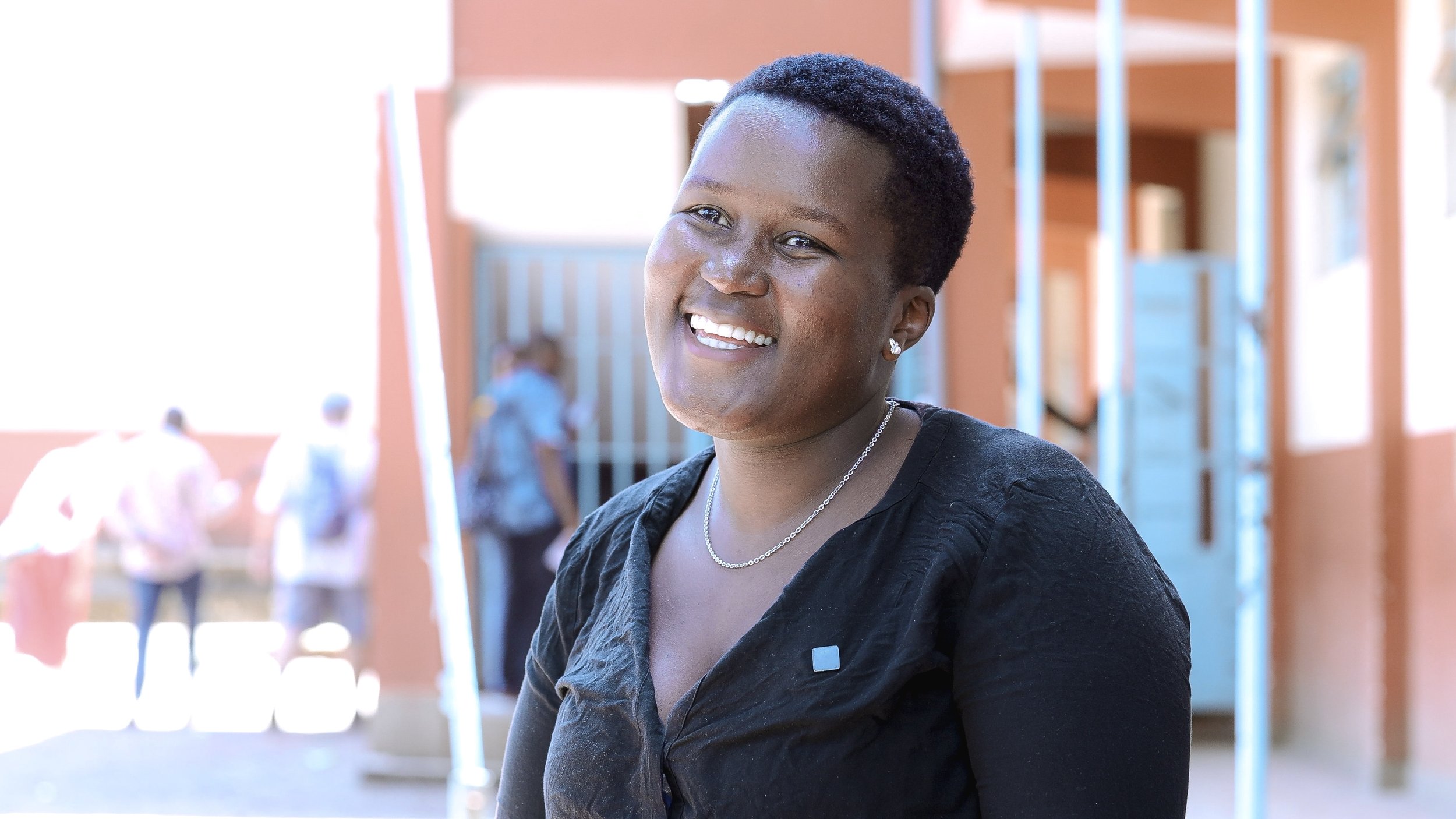
There is a phrase you will hear all over Kenya - at weddings and in WhatsApp groups, in boardrooms and in the back of matatus, spoken with the weight of a decision or the lightness of a joke, depending on who is saying it and what they have just been through: "Nilijiita mkutano. " Translated literally, it means: I called myself to a meeting. More truthfully, it means something like: I sat down, alone, and had it out with myself. I had a private reckoning. I made myself accountable to the version of me I wanted to become.
It is a phrase that, when you hear Damackline tell her story, keeps arriving uninvited - because her whole journey is precisely that: A series of private meetings she called herself to when no one else believed the agenda was worth attending.
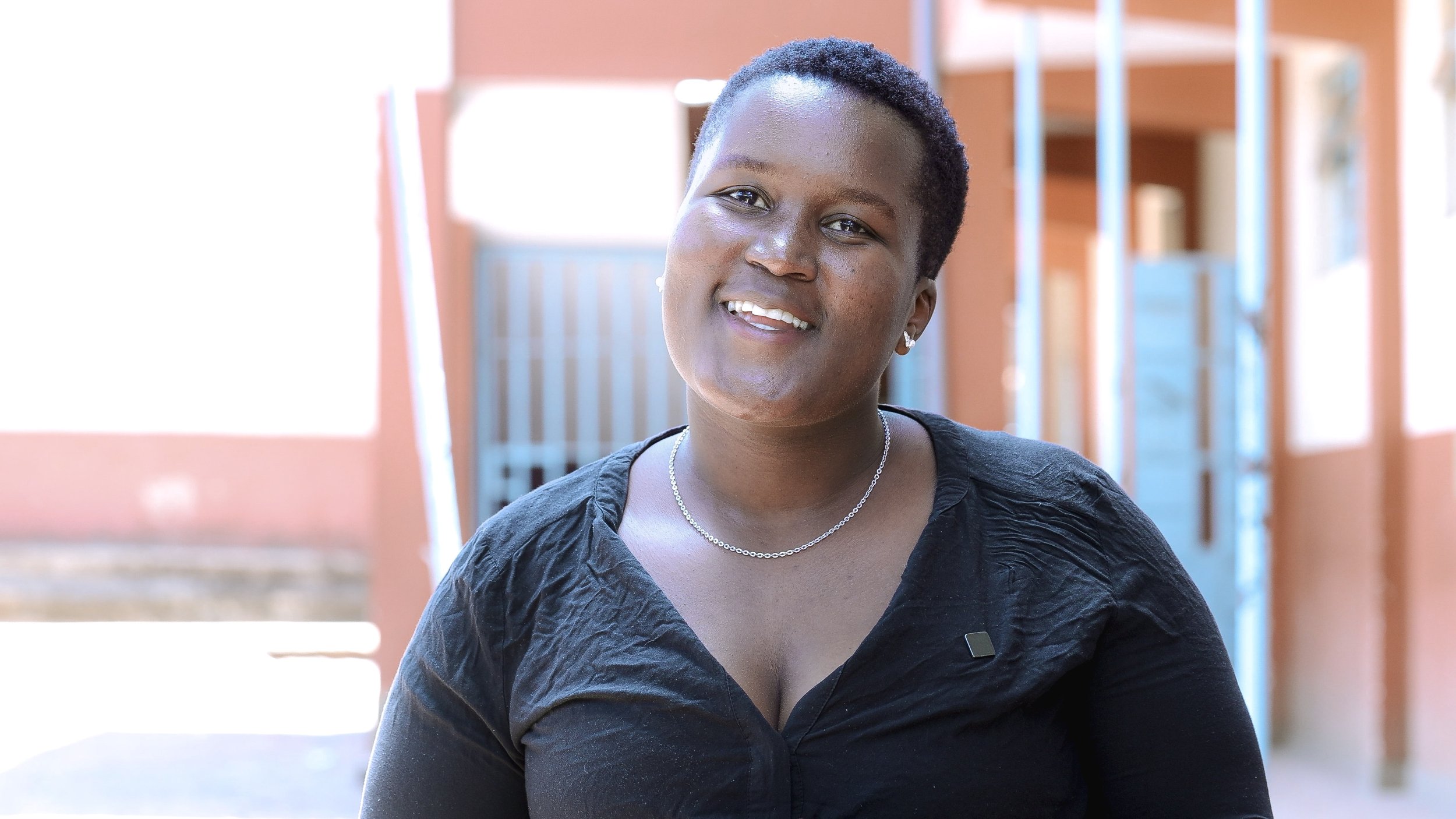
"I'm Damackline," she begins, voice unhurried, grounded in itself. "A young girl from the slums. I come from Kibera slums. That is where I have grown and raised. I've learned there, and now I'm here."
And now I'm here.
She grew up in the village, the musical instinct already present but undirected - no resources, no pathway, no one pointing toward anything that looked like a career. So she did what self-taught artists in Kenya have done for generations: She joined a choir. Then another choir. Then another band. She strengthened her voice the only way available to her, which was slowly, quietly, and entirely on her own terms. When her family relocated to Nairobi, she landed in Kibera, and she found the Chemichemi Choir at Springs of Life Lutheran Church in Kibera - a name that feels earned in retrospect.
Kibera is reputed to be one of the most densely populated places on earth, and by many measures one of the most economically marginalised. It is the kind of place that demands every resource you have just to stay still - where the cost of a choir uniform, or a matatu fare to a rehearsal venue, or a small tin of petroleum jelly for your skin is not a minor inconvenience but an actual barrier to the life you are trying to build.
Damackline experienced all of those barriers. Specifically. Concretely.
"It was a very tough beginning," she says, not shy about the details. "At some point, I didn't even have the required attire for the church choir. I could not even afford maybe mafuta ya kujipaka. I could not afford basic things because of my family, where I come from - they couldn't afford it either. I didn't have any support from both the family and friends."
The support not coming is one thing. What compounds the barriers is what comes instead. "I was being left behind because I couldn't afford the fare to get to where the choir practised or performed." You train, you commit, you show up in every way except financially - and you are left behind. It is the particular cruelty of resource scarcity in creative spaces: The door is technically open, and yet…
Her family, for their part, were doing what families do when they cannot see where a child is going: Encouraging her to be a little more reasonable about these dreams and desires of hers.
"Nilikuwa navunjwa moyo at some point," she says. I was feeling very discouraged. "Even my family members could not see it as something that will come one day to be what it is right now."
The familiar question echoed around her: Hio ni nini unafanya? What is it that you are doing, exactly?
It is worth pausing here, because this is not a story unique to Damackline. It is close to universal among young creatives growing up in Kenya's informal settlements - and the data bears this out. Young people from Nairobi's informal communities have consistently reported being excluded from the spaces where creative opportunities are decided, their work undervalued, their ambitions treated as luxuries that people from their backgrounds cannot afford to have. In a country where youth aged 15 to 34 make up 35% of the population and where over 2.1 million creatives operate in the informal economy with limited access to formal funding, training, or institutional support, the question 'Hio ni nini unafanya? ' is less a family conversation and more a structural response - a system and society reflecting back its own limited imagination.
Damackline's response to this system was to call herself to a private meeting.
"The passion that was in me was really pushing me," she says. "I kept telling myself that I have to be intentional about what I want to be in life. I could watch my role models sing - see the way people are singing on stage, the way they are moving crowds - and I started there."
She found those role models, she says, partly through social media. Vocal training videos. Tutorials from vocalists she admired. She would try them, fail, try again. "I could come across a video of a vocalist trying to train and I'd try it out, but I couldn't make it. I just decided I will give it my all. I sacrificed all that I could for me to practise well and push on."
Then came the moment everything clarified.
"One day I was called to present praise and worship. And when I saw the crowd move, I felt: Dama, you have to do this, and you can do it even better than this."
I don’t view it as coincidence that her turning point was communal - the crowd moving - rather than individual. There is something in the Kenyan experience of music that is fundamentally about connection, about call and response, about energy exchanged between performer and audience in real time. When Damackline felt that crowd move, she was receiving validation - but she was also recognising something she was created to do.
The external opinions did not immediately shift. They rarely do. Some of it, arguably, grounded in truth: "The opinions would sting inside," she admits. "I was like, eh, they've told me the truth - I couldn't even sing on the keys, I was told I was too shallow." But here is where kujiita mkutano arrives again. "I was calling myself to a private space and talking to myself. I'm like: Damackline, you have to do this and you will do it and you will make it to where you want to be. "
That private conversation - held not once but repeatedly, over months and years - is the real subject of this story. Not the stage, not the applause, not even the talent itself. The conversation she kept having with herself when the world offered her nothing to work with.
"Do you see yourself continuing this for a while?" I ask her.
"Forever."
The word arrives so quickly it takes a moment to register. Then she explains it.
"Where I've come from, it's a long journey. It's a traumatising journey as a person, because sometimes we don't share everything. But personally, it's a very traumatising beginning. It has taken me a step of sacrifice to become who I am here, where I am today. So I will just do it forever."
Forever . I don't view it as a statement of bravado. I see it instead as a statement of proportionality. The sacrifice was too significant, the journey too long and too hard, for this to be anything other than a lifetime commitment. There is a kind of logic to it that is difficult to argue with.
Kenya's creative sector now contributes 5.6% to the country's GDP, according to the Kenya Bureau of Statistics' 2024 report. It is the kind of number that gets quoted at policy forums and investor briefings - and it should be, because it is significant. What it does not tell you is where that value originates. It does not tell you about the Chemichemi Choir, or the YouTube vocal tutorials watched on a borrowed phone, or the rehearsals missed because the fare was not available. The number exists because people like Damackline exist. The number, and the people who built it, deserve to be spoken of in the same sentence more often than they are.
The policy landscape is shifting, albeit slowly. There are more conversations around creative economy support, and finer (yet crucial) elements like copyright laws. What remains to be seen is whether, when a framework is built, it will be accessible enough to reach someone like Damackline at the entry point of her journey - not after she has already proved herself, but before.
This, in fact, is her message to funders and policymakers, delivered with the same clarity with which she speaks about everything else.
"Don't only look at where they are now - look at the potential that they have. Fund them as you can. Please, don't just let them be there because you don't see the potential now. The potential will emerge later in the days that are coming."
Look at the potential, not where they are now. As investment theses go, it is one of the most honest you will hear.
Damackline is a mother. The message Damackline leaves for her daughter (who she affectionately calls "Queen"), framed as a letter to a future 14-year-old, is perhaps the most affecting thing she said.
"Queen, as a young girl at 14, I was there as your mother. And I tried my best to become who I am today. But what can I tell you, now that you're 14? Work on the basics. Keep working on your talent. Explore yourself at 14, because I know one day, through the sacrifices that you can give now as a young girl, you will be more than where I am today. Let not the traumas around you discourage you."
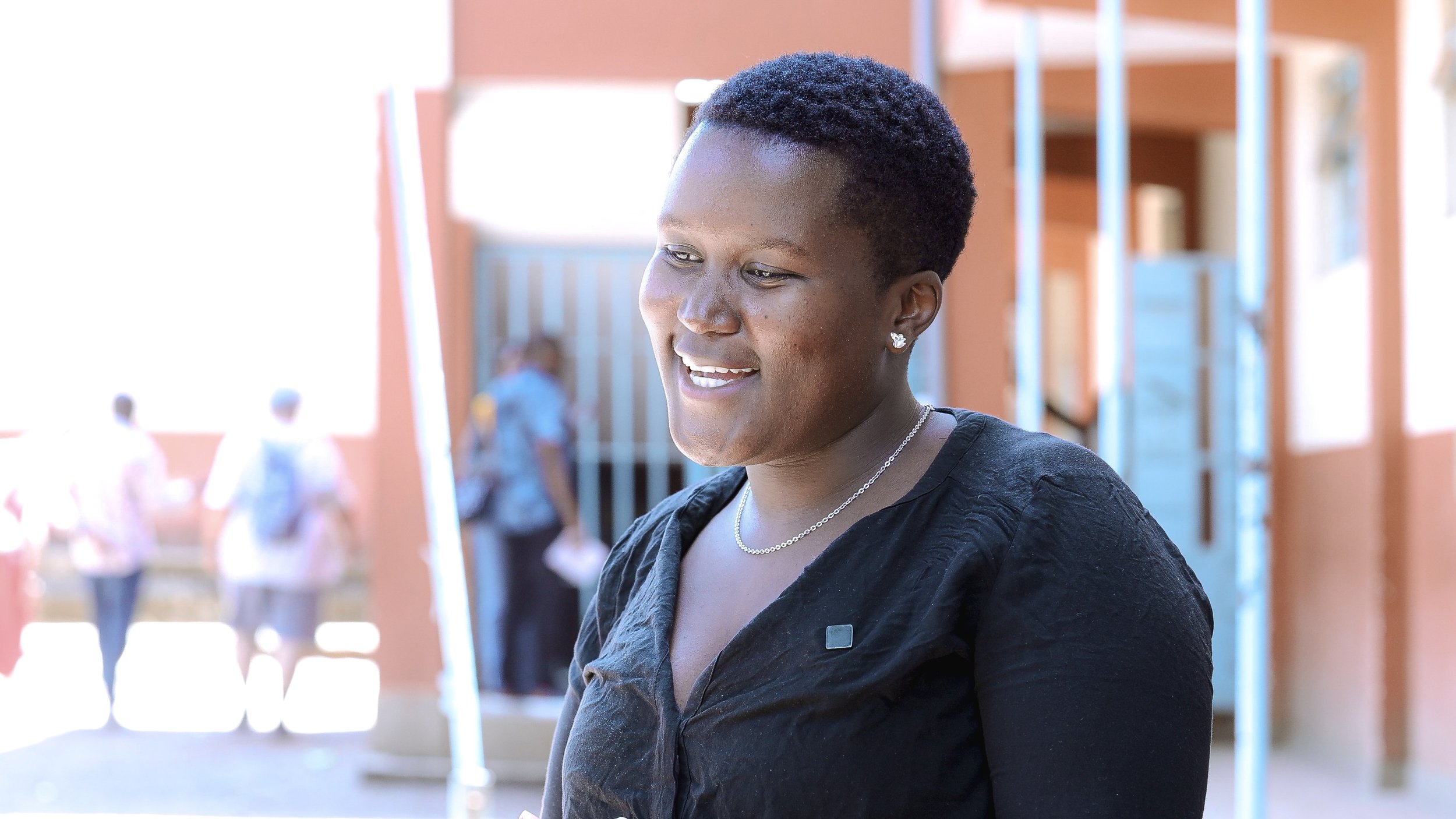
She has also turned her gaze outward. "I will mentor those people," she says, speaking of the young artists coming up behind her. "There are some people outside here that think that music can't pay, but music pays."
It does. Increasingly, and with growing formal and policy recognition - music pays. Damackline knew this before the data did.
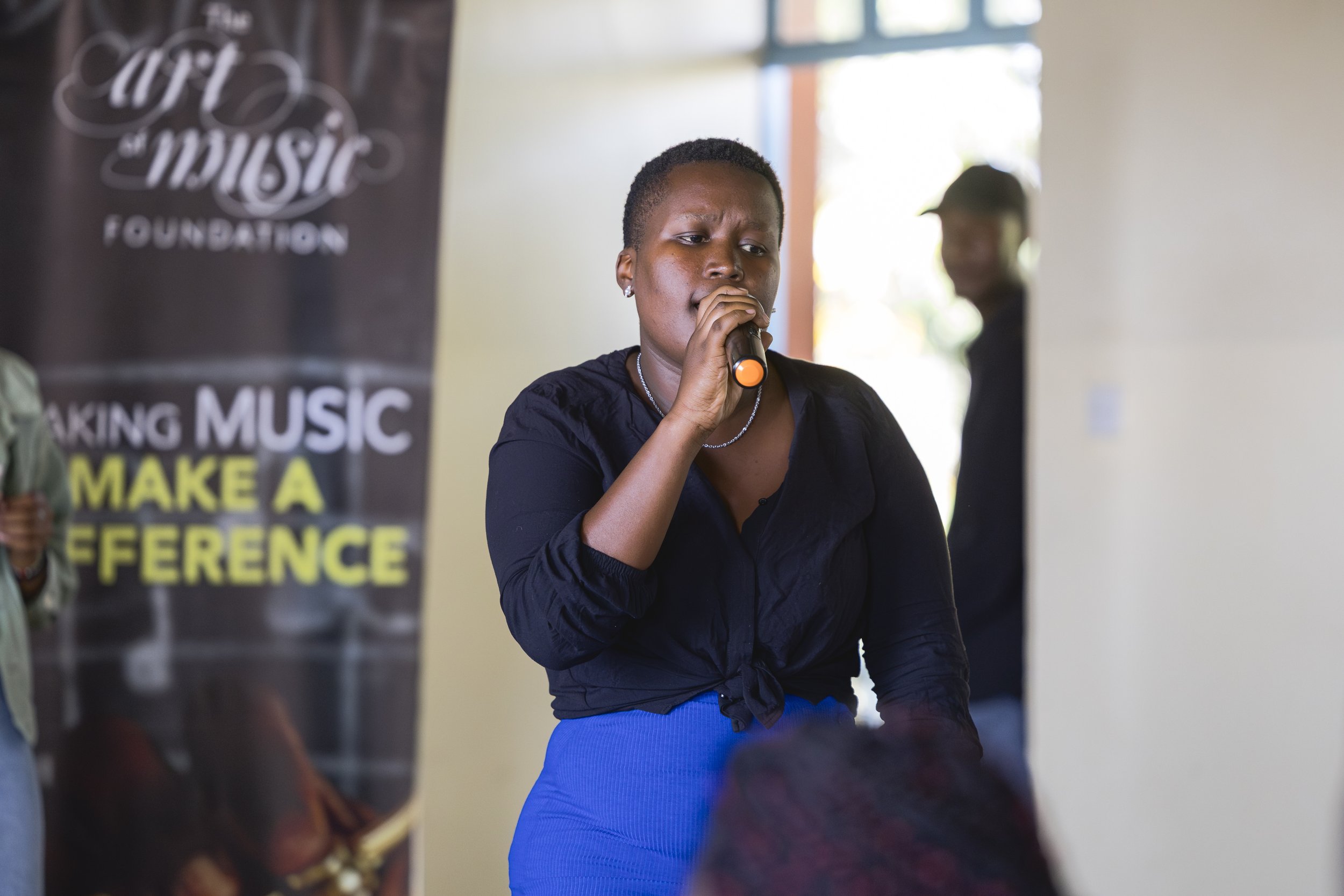
Her live rendition of "Ndaya" - the rhumba classic by Faya Tess - backed by talent from the Ghetto Classics collective at an Art of Music event in Korogocho, drew exactly the kind of response she had spent years working toward. A crowd fully in the music. Some on their feet. The energy palpable and real. Art of Music, as a skilling partner within the Sanara programme, provided one of the platforms that gave that moment context and form.
But the voice that carried it - the instrument that had been built through years of self-directed practice, private discipline, missed rehearsals, borrowed tutorials, and kujiita mkutano after kujiita mkutano - that was entirely hers.
"Keep pushing, keep going. You can do it."
Those words were addressed, nominally, to Queen. But Damackline was speaking from a life of having already lived them. She already knows they are true.
Published under the Sanara programme, implemented by HEVA Fund in consortium with Baraza Media Lab, SNDBX Ubuntu, and GoDown Arts Centre, with support from the Mastercard Foundation.