
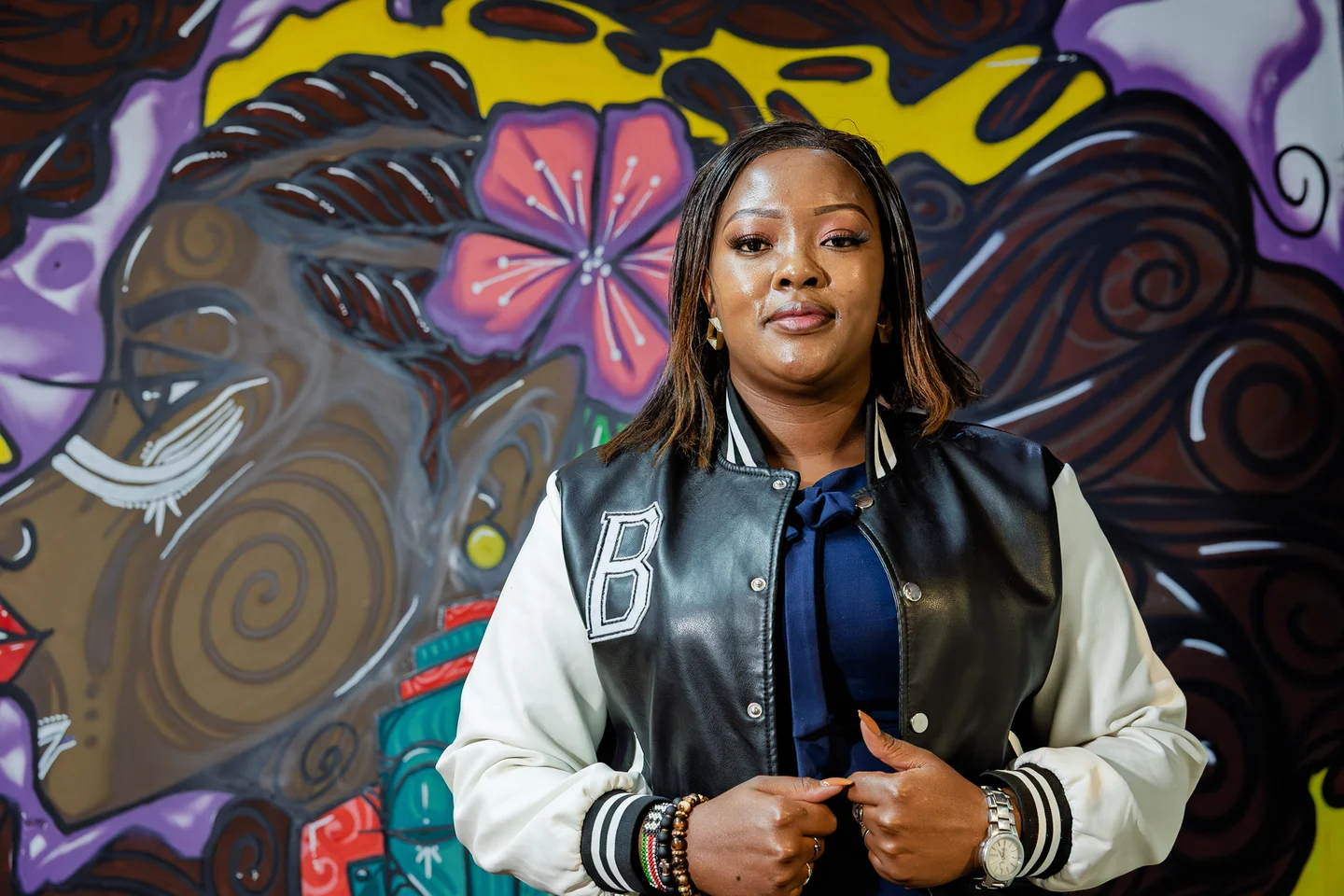
“I never had a hard disk or anything.”
Six o'clock
That's how DJ Racey began, standing at the microphone at Baraza Media Lab, and then she switched into Kiswahili to tell the room the rest.
When she started, she had no machine. There was a day she still remembers, at Mediamax: on air at six, and no laptop. So at six she was in town, waiting for a machine to arrive. The producer rang. Where was she? She was meant to be on air. She was still on the road.
She called it her journey without a machine. Some would call that a hobby, she said.
“But to me, I would say that it's a career, because that's what pays my bills.”
December
She'd meant to be on the other side of the speaker. “I was actually to do music production.” She took a diploma in journalism because careers have to be decided, kept singing, recorded a little, and then stopped. “I think I was too shy to continue with the journey.” DJing kept her inside the music without asking her to be its voice. She started on a laptop with Virtual DJ, playing for the pleasure of it, until she noticed what other people were being paid. “I saw, wow, it's a career. It's something that is actually paying.”
She went to a DJ academy because she didn't want to be a hobbyist - “I wanted to take all the skills” - and enrolled in December 2019, which is the worst month in the year to find a DJ in a classroom. “I never knew how busy DJs are in December. I got to school and you couldn't even see the tutor in class, because they were so busy with the gigs.” The students did theory. Their teachers were out earning the season's money. Classes began again in January 2020, ran for a few weeks, and then COVID closed them, and the attachment that should have followed the course - the months of standing next to a working DJ in a working club - didn't come that year, or that year's end, or the start of the next.
“It had to be you to do the work.”
The clubs where an attachment happens were shut at night for nineteen months. Kenya's dusk-to-dawn curfew came in March 2020 and was lifted on 20 October 2021, and bars went back to closing at eleven.
Weeknights
In 2021 she found a club that would take her on weekends and Sundays, and then, in Lavington, a residency.
A residency means the same room on the same nights for a monthly wage. Monday, Tuesday, Wednesday, Thursday: at first she had every night except the two that pay. “Gigs usually pay better than being there stuck in one place. But being stuck in that one place, to me it worked.”
It worked because the bosses were the kind who paid. “It was that place that it is a must they pay you. They were taking care of me.” And because a boss who hears you every Tuesday starts to ask about Saturdays. “The boss would come to tell me, maybe I have this private event, can you do this for me? And from that very moment I felt, oh, okay. This is now what I have been looking for.”
“I managed to get a MacBook from that place. I was paying all my bills, and I managed to get a machine.”
Two in the morning
By the time It's Her Turn opened, people knew her face. The posters landed in her inbox, and the calls came from people who'd seen her on Kameme TV, Mediamax's Kikuyu-language channel: try this, it's a Kikuyu thing, you can do this.
“Me and competition and Kikuyu, no, I'm not doing this.”
Then another DJ phoned. “You are like, okay, let me apply.” The entry was a ten-minute video, and she didn't make it. She didn't make it the next day either.
“I was postponing each and every day. I'll record tomorrow. I'll record tomorrow.”
One night she came home from a gig. It was about two, and she decided that it was tonight. Ten minutes of mixing took until four. She had already played one set that night.
“Even if I won't win, you never know who will be there watching whatever I'm doing.”
The minute it aired
The finalists' sets went up on the Kikuyu Love Sessions YouTube channel, recorded for them free of charge. Hers moves through songs in more than one language.
“The very minute it aired, you see, people started coming into our inbox. I want you to do this job, I want you to do this.”
At the handover Allan Gitau, who started the campaign, picked out her account of the phone ringing as the moment that told him why they'd bothered. “Forget even the kit,” she says. “Forget about even the awards they will give us. I have felt it myself, because I have gotten the gigs, even through that video.”
Afternoon, Baraza
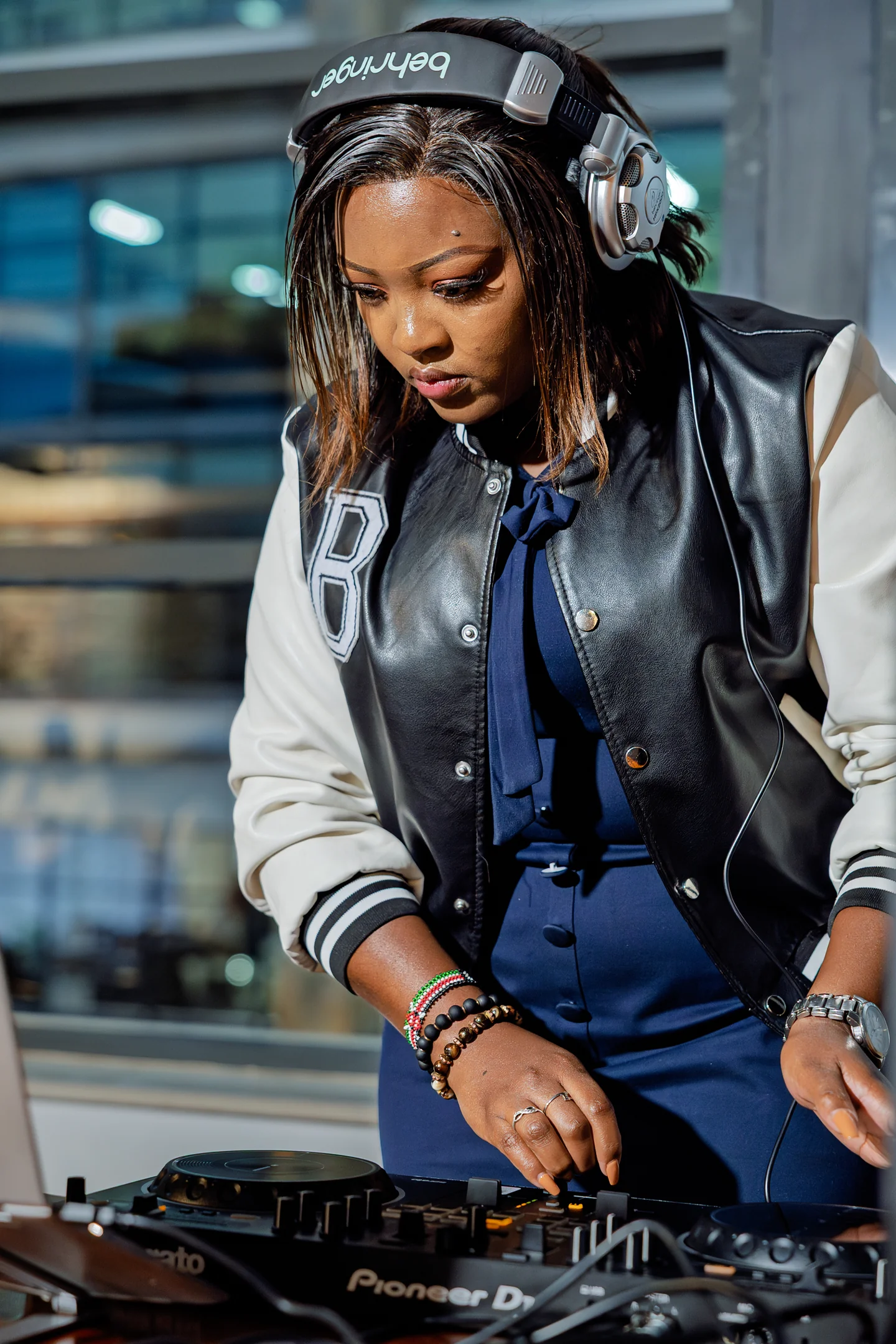
The kit came anyway, and later she bent over it by the windows with the headphones on and the laptop open, playing.
“I never knew I'll be one of those who is receiving the kit. It is showing me myself, like somebody has seen what I do and has appreciated me.”
“I won't give an excuse when somebody calls me for a gig: I don't have a machine, I don't have a laptop, I don't have this. So right now, if you just get me a gig, right away I'll be there.”
“You have a gig and you don't even know how to charge.”
She talked the room through it in Kiswahili: you name your fee and you're offered half; you hear of a gig that pays far more and you don't know where to begin; she and Jacy, another finalist, have been asking each other what to quote. You have what it takes, she said, and you don't know how to start.
Earlier that afternoon, SNDBX's regional coordinator had stood at the same microphone and described the business training the finalists would start in January: strategy, finance, operations, marketing, legal. Its purpose, in the coordinator's words, was that “I will be paid for the value that I actually provided, not the other way around.”
“This industry is so male dominated, to a point when you are a DJ, you have to do extra. You have to do something extra to be seen. Before you see a female DJ in a big event, it's so hard. Maybe it's just a stereotype, like female DJs can't deliver. But you haven't gotten me to that stage, that platform, and seen what I can do.”
“It's just that you haven't sat down and taken your minutes to look and see what is DJ Racey doing.”
“So male DJs will know now: we are packaged, and we are coming.”
Somebody, she says, will be scrolling past a screen one day and stop. “And you'll see, ah, so there are female DJs doing this. And maybe I'll be the one who is playing that very minute.”
Sanara is a Mastercard Foundation programme delivered in partnership with HEVA Fund, SNDBX-Ubuntu, Baraza Media Lab and GoDown Arts Centre.