
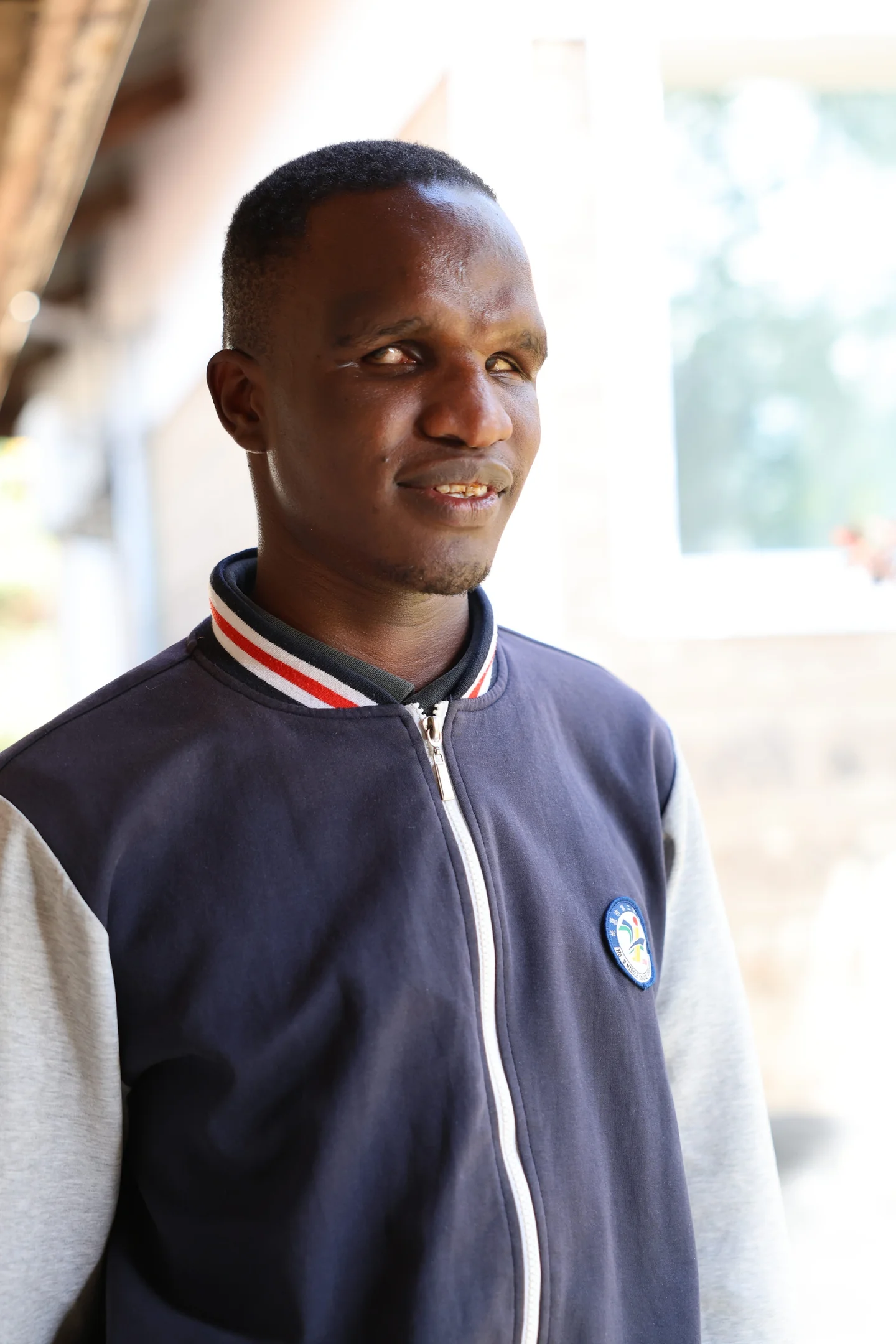
“Napatana na kitu wote nacheza. Napiga piga tu vitu.”
Emmanuel Ogeto started in Standard 2 or 3, on whatever was within reach. Anything he found, he played; anything that would sound, he hit. The real instruments were the problem. “Mostly access ya those instruments ilikuwa ngumu.” Primary school, he says, “was not very promising.” It took high school, and instruments he could come back to every day, to make him consistent.
He’s ranked them since. “Yenye niko best ni keyboard, then the drums. So hizi zingine ndio naendelea kujifunza polepole.”
In Mali in the 1960s and 70s, instruments were hard to come by too. Amadou Bagayoko, who lost his sight as a teenager, remembered musicians asking people travelling to France or Côte d’Ivoire to buy them. Hotels hired bands and provided the instruments. He met Mariam Doumbia at the Institute for the Young Blind, where both played in its orchestra, Eclipse, a band of blind and sighted musicians.
Now Emmanuel’s a student at Kenyatta University, standing outside the Kenya Society for the Blind in Nairobi, a building he couldn’t have found a year before.
Hata sikuwa najua
“The first time hata mimi kuja KSB, ilikuwa tu hiyo last year. Tulioambiwa tuapply, tukuje auditions. Ndio hata nikajua hata mahali iko. Hata sikuwa naijua.”
He came for the auditions on the day, got through, and kept coming. “Since that day, KSB ni, tuseme tu ni home tu. Nimeizoea.”
Before that, he’d been doing nothing he could call work. “Before I joined the project, I was jobless. Let me say I was jobless. I was very idle.”
The 2019 census counted 918,270 Kenyans aged five and over with a disability, and 333,520 of them with a visual one. The National Council for Persons with Disabilities puts the census rate at 2.2% of the population; the World Health Organization’s global estimate is about 16%. UN agencies in Kenya have questioned the count.
“So Sanara has given me a chance to practise what I have, to share what I have, to showcase. To showcase what I have.”
A call
The band started with a phone call. After the auditions, “we were the people wenye walipata hiyo bahati,” and then someone rang him: someone he knew, who knew him, and knew what he could do.
“Nikastuka tu nimepigiwa simu, kwa sababu nilipigiwa na mtu mwenye najua, na anajua kazi yangu. So akaniambia, tunataka kuform band. Na mimi nikaingia tu. Tukakuja tukajaribu kitu, na ikawork.”
The band is Pearls Band, a group of visually impaired musicians that KSB says came together through Sanara. It pushed him into music he’d been avoiding. “Imenisaidia pia kuexplore the other genres zenye pia mostly sikuwa napenda kusikiliza.” And into people. “Before nijoin, kuna watu wenye hata sikuwa najua. But sasa venye hiyo program ilianza, nikakuja kuinteract nao. Na tumekuwa marafiki.”
“We have different skills. So akikuja na yao, mimi nakuja na yangu. We share. So then we come up with something.”
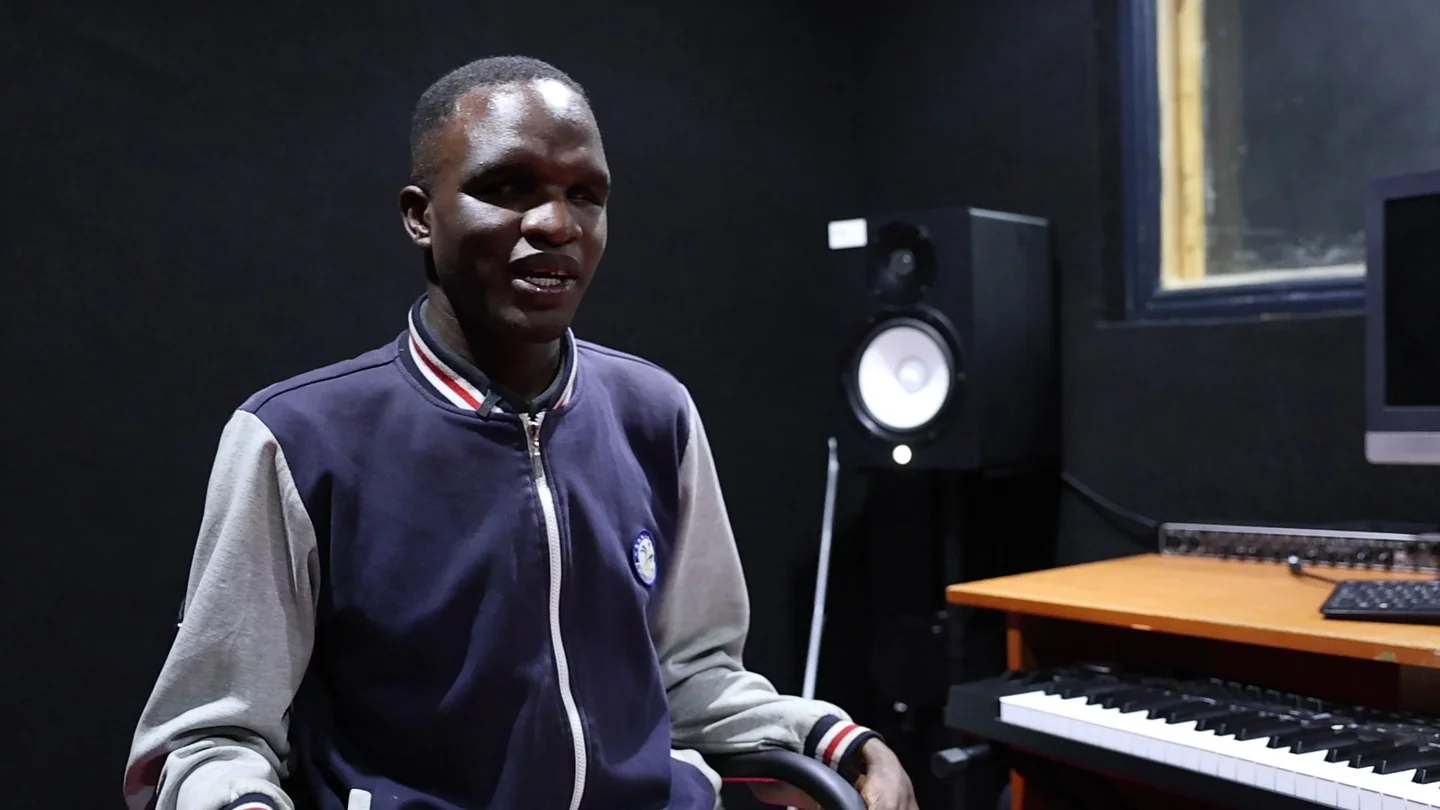
Ka message
The first money came as a notification. Pearls Band had played the Weston Hotel on Lang’ata Road, and the December holidays were about to start.
“Ka message kaliingia, hapo nikasikia vizuri.”
“At least iliniboost-boost, kwa sababu ilikuwa ni that December holiday ndio tulikuwa tunaingia.”
He went home for the holidays.
“At least nikiwa tu nyumbani, sikuwa msoto.”
“Zimenisaidia saidia kulipa, hata kama sio kila kitu. But inasaidia tu.”
Perform sana
He gets called on his own now too, without the band, and he wants both. “Mimi naweza sema tu zote.” “Pearls Band pia I would like to perform sana. To perform sana. Tuperform tu sana.”
His advice to another young blind musician is to keep doing what you know, and not give up.
“Kwa sababu hata mimi, hii practice yangu ndio imenifanya pia watu wamenijua. Wengine wanajua kazi yangu, jinsi mimi hufanya.”
“God’s time is the best.”
Sanara is a Mastercard Foundation programme delivered in partnership with HEVA Fund, SNDBX-Ubuntu, Baraza Media Lab and GoDown Arts Centre.