
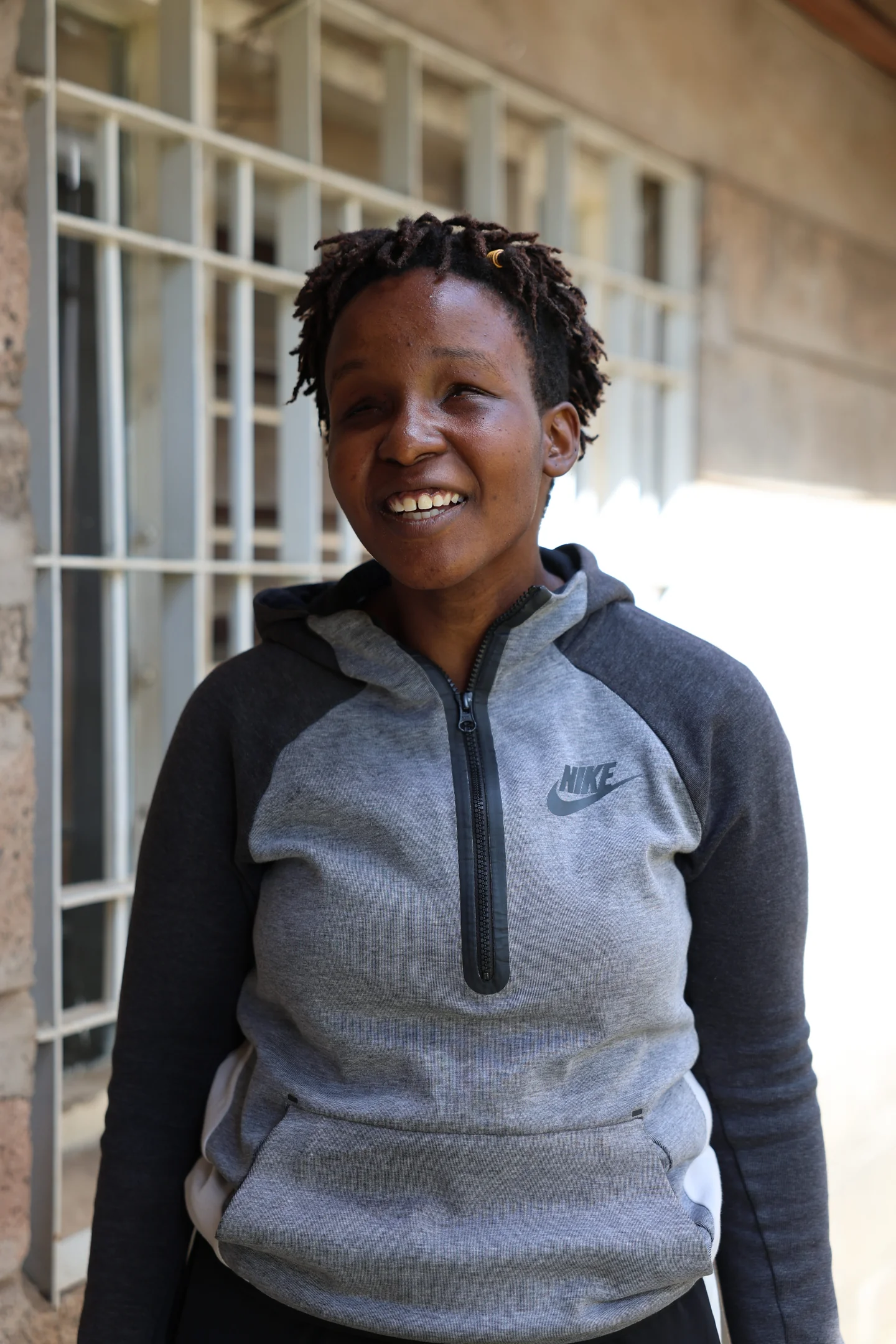
“Mi hata ni kama nilizaliwa nikiimba.”
June Masimoni lost her sight at two months old, “due to many, many complications,” and she can’t remember a time before the singing. “Kukua, kukua, singing has been part of me.” Before anything else in the studio at the Kenya Society for the Blind, she has a catchphrase going. “Tuko side. Tuko side.”
“I am visually impaired, as you can all see. But I can say I’m a person with visual impairment with a vision.”
Kisumu, 2022
The serious singing started at high school, at Thika School for the Visually Impaired. “Nilifanya classical pieces, that is the operas.” In Form Three she went through the music festival rounds and reached the gala.
The 94th Kenya Music Festival closed at Kisumu Girls High School on 23 September 2022. The deputy president, Rigathi Gachagua, gave the closing address, and he talked about her.
“I have listened to a student in Form Four from Thika School for the Visually Impaired by the name June. I have heard one of the most melodious voices I have ever heard in my life,” he told the hall, as the national press reported it. “In recognition of that melody and to encourage that young girl, I’ll take over her education up to where she goes.”
June remembers a cheque.
“Riggy G alikuja na cheque. Ndio ililipa my fee, ikanisustain mpaka nikamaliza Form Four. Hiyo ndiyo naweza sema ni my first time.”
“You just sing. You never know who is watching you. You never know mtu anaweza kuita gig, na upate chakula kwa meza.”
Nairobi, 2025
She finished school in 2023. Two years later KSB put out a call under Sanara for auditions in singing, instruments, DJing and podcasting.
“I fell on the category of singing, that is a vocalist. So I came for the auditions, and by God’s grace nikapita.”
About a month of training followed. The voice improved - “vocal-wise, yes, I’ve somehow improved” - and so did her grip on the business.
“Nimejua more about the intellectual property, like ku-own muziki yako, like kuimarket kule kwa social media.”
“It’s like ukuwe na kwako kwa nyumba, kwako nyumbani. You will not allow a stranger akuje ku-invade ama aingie kwako bila ruhusa. Of course, utamuliza, ‘Why are you doing this?’”
“As long as umejua rights zako, music inaweza lipa.”
She records her own songs and puts them on YouTube. A month of training, she says, isn’t something you let go down the drain. “Ukioacha igo down the drain, hapo ni kama ulikuwa unafanya kazi ya hiko.”
Somebody once told her outright that music isn’t a job, “sana sana as a person with disability.” “Sikatai lazima ukue na any other thing ya kufanya apart from music.” “Hizo zingine unasikia ni kama, ni story tu zingine.”
Kenya ratified the UN Convention on the Rights of Persons with Disabilities in 2008. Its Article 30 commits states to “enable persons with disabilities to have the opportunity to develop and utilize their creative, artistic and intellectual potential, not only for their own benefit, but also for the enrichment of society.”
The bands
The month put her in two bands: Gusa Nafsi, and the Pearls Band. KSB put Gusa Nafsi on KU TV’s Art & Culture that July.
“Kila mtu hapo ako na passion yake. Kila mtu anajua ni nini anatafuta.”
With the Pearls Band she’s played hotels, and hotels have hired blind bands out of Thika before: in 1992 seven graduates of Thika School for the Blind formed the Sweet Wave Band and played the hotels at Watamu. It’s paid. “I earned something that ilinisustain. Haikuwa bure.” The studio led to other rooms, as far as voice-over work, and it’s still somewhere to bring a song. “Tukishamaliza training yako, unaweza kuja hapa ufanye nyimbo zako, and you market them.”
She keeps going partly by watching the others. “Unajua kuna times unalook up to somebody, unataka kuwa kama huyo mtu. So once unaona huyu mtu pia amesucceed, hata hiyo ka feeling ya ku-give up ikikuja, inapotea.”
“Someday, all that you put your heart to do will never be put to shame.”
Platforms
But the gigs come and go. “Challenges pia ziko juu sometimes hizo gigs hakuna.”
“Training tumepata ndiyo, lakini sasa platforms ndio sometimes inakuwanga issue. Either ziko minimal ama saa zingine haziko. Eeh, but training iko hapa. Opportunities ndiyo shida, na platforms.”
She wants more platforms, made on purpose, for anyone with a disability and an act: music, voice-over, theatre.
“As long as we are working and we are earning, we are also advocating. Like society ipate kuelewa kwamba kuna these persons with a disability, na sio mtu wa kuhurumiwa, na sio mtu wa kukaa hapo.”
Sanara is a Mastercard Foundation programme delivered in partnership with HEVA Fund, SNDBX-Ubuntu, Baraza Media Lab and GoDown Arts Centre.