
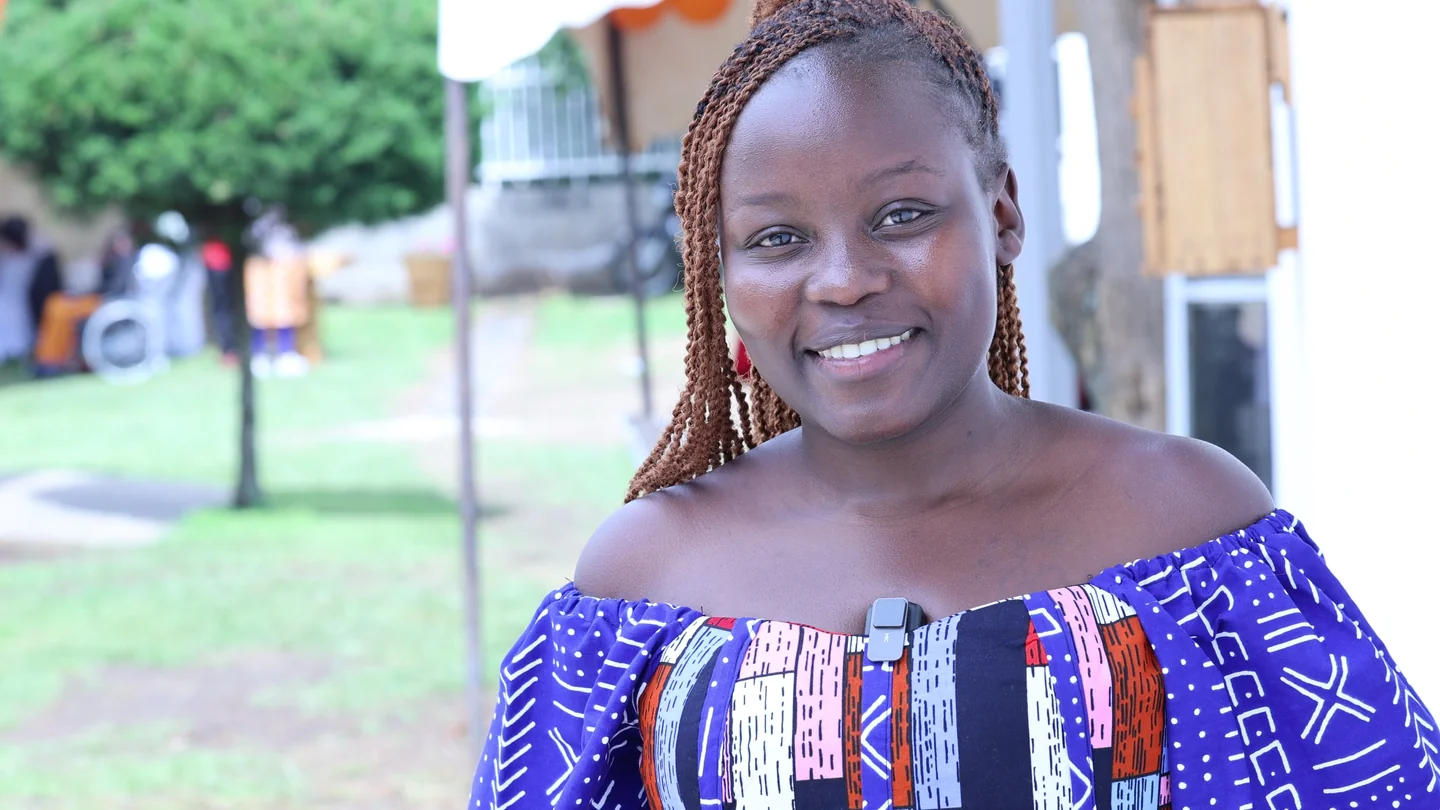
“I’ve taken my business as an 8 to 5, because people say that creatives are jokers, creatives won’t last. But for me, I have goals, and I have to achieve those goals.”
Position
Fashion designer, and founder of Michelle Fashion House. The shop is in Nakuru town, on the second floor of Shoppers Paradise.
“For me, it’s like now my career. I’m a fashion designer. That’s a career.”
Qualifications
The first was a prize. In Form Two at Moi Girls, home science came with fashion shows, and she designed the outfit for the girl who won best model.
“That’s how I was crowned the best fashion designer, and that’s when I realised I really need to do fashion as a career.”
Her parents had another career in mind. “My parents are career people, and they want their children to also follow their steps. So my mom was like, no, you need to be a doctor. You have always wanted to be a doctor. But then you see, my passions changed.”
“And they were like, you’re going to campus to pursue fashion and design?”
She went to Egerton University and studied fashion and design. Her parents came round. “They will just give you an idea, but at the end of the day, they will go with what you want.”
Start date
At 22, straight after graduating, she opened her first shop.
Pay
Irregular, at first, and some months short of the rent.
“At the start, I almost gave up, many times. I can’t lie, I almost gave up almost a hundred times.”
A new fashion business doesn't have much cash flow, she says. That comes later, if you last. The months she couldn't pay the shop's rent, her parents paid it. “Thank God I have supportive parents. They came through.”
“But the passion that I have, I used to wake up every morning, and I’m choosing this struggle.”
Market
“Fashion is one field that is ever changing,” she says, and she gives it a long view: since the 1900s. There's room, in her account, for anyone who'll train.
Kenya imported about $210 million worth of used clothing in 2024, the third most of any country in the world, according to UN trade data compiled by the Observatory of Economic Complexity. By the national statistics bureau's count, mitumba imports cost Sh27.8 billion in the year to March 2024, up by a third on the year before.
Training
In June 2025 she wanted, one day, “a fashion design school, to train students”. Later she recorded a short film for the programme.
“I’ve always been passionate about fashion since childhood, but what I needed was structure and strategy. And that’s what Sanara gave me.”
“Before Sanara, I was working alone. I had the skill, but I did not know how to turn my idea into a sustainable business. Training others was only a dream.”
The business training, run in Nakuru by SNDBX-Ubuntu, covered financial management, customer targeting and product packaging. In the film the school has become “a full fashion training institute”, with production expanded and “Kenyan designs” taken to the world stage. She's already training young designers in the shop, ones “who don’t have the financial capacity to go to college”.
Staff
“And most importantly, I learned that scaling is possible. Since then, I’ve hired five people.”
One of them is in the film too. She came asking for a job, and got one. What she learned from Michelle, she says, was how to deal with customers, and how to deal with life.
In July 2026 the programme reported more than 3,000 creative start-ups supported across its six counties. It hasn't published how many have gone on to hire.
Next applicant
There's a girl at Moi Girls now who has just found fashion and doesn't know if it pays. Michelle has a name for her.
“Sheila, many people say that fashion doesn’t have money. But I will tell you not to give up, because it’s not even the money that we are looking for. It’s the fulfilment that you’ve done something that you love.”
“And that’s the fulfilment we need in life, not money.”
Sanara is a Mastercard Foundation programme delivered in partnership with HEVA Fund, SNDBX-Ubuntu, Baraza Media Lab and GoDown Arts Centre.