
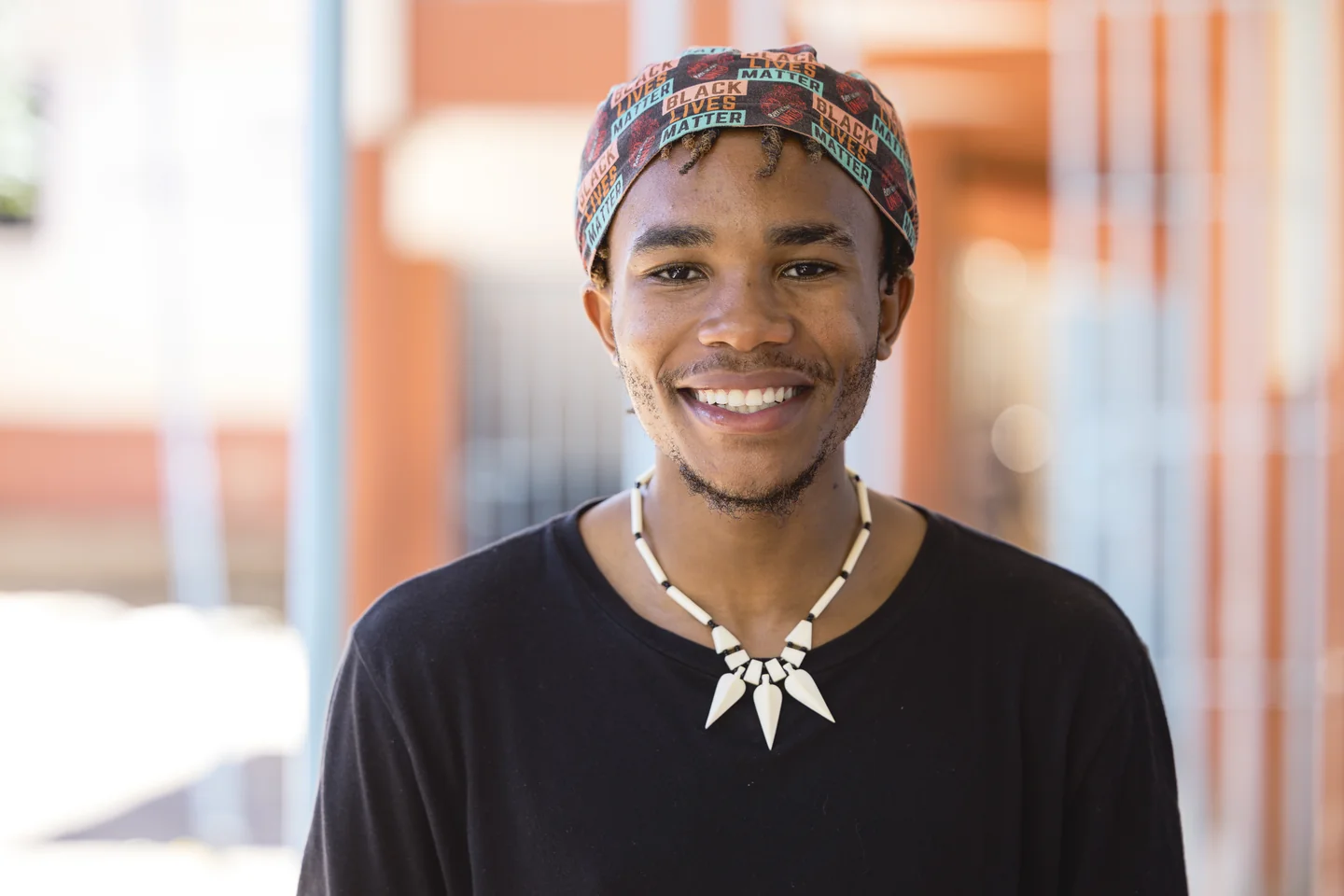
“Now you played this and this chord. Wow. I can add you some.”
That was his father, a guitarist in a folk band, Dola Kabarry. Said Yassin had started guitar lessons and knew a few chords, in a house that already had a guitarist in it, and for a long time he hadn't been much interested. “I used to hear him play the guitar and I was like, ah.” He'd come into the room, and go out again.
Then the chords started to sound like something. “Slowly by slowly, after learning chords, I was like, hey, it sounds nice. I’d like to learn more and know how to play more chords.”
A friend who plays the trumpet told him about weekend trainings at Ghetto Classics. “I was really curious.” He was one of the earlier ones to join. The programme had begun in 2008 at St John’s Catholic Church in Korogocho, when Father John Webootsa asked Elizabeth Njoroge to start teaching music to the parish’s children; she started with 14. The tutors he found there he calls “beautiful and supporting”. The Art of Music Foundation, which runs Ghetto Classics, is one of Sanara’s training partners, and it’s through the foundation that Said is part of the programme.
His mother came round last, and in the currency that getting to practice runs on. “Just recently is when she started seeing the fruits of my music game, my passion.” Now she asks, “Hauna fare? I can give you.”
For a long time the fare came from wherever it could: help from his dad, or his tutors, or “hustle hapa pale.” Where he's got to, in his own word, is stable, or more stable than it was. “My ground imekuwa more stable.” The more his experience grows, the more gigs come.
Will it hold?
“Definitely. Definitely. Na signs zimeanza kuonekana hivi mapema. Plus the agenda on the creative economy imekuwa. Saa hii wasee wanaongelea more. There are more promises. Na kuna bills pia za creative.”
There are. The Senate passed the Creative Economy Support Bill in August 2025; as first published, it would set up a guild to advise government on creative policy, and a fund for creatives. The National Assembly’s culture committee reported on it in June 2026, and in August 2026 the committee’s chair brought a separate Creative Economy Bill, with its own fund, a register of creatives and licensing for audio-visual work. Neither is law.
“We’re living it right now.”
What he wants from the people writing them is a seat. “Tumekuwa tukiona feeling ya ni kama matakwa yetu hayajakuwa yakiekea uzito fulani.” Inclusion in the making of policy, “inclusion ya creatives yenye interview ya huko kwa ground”, and sensitisation in communities where artists are still misunderstood, so that they can “present the best of us”. The Senate’s bill would have government hold a standing dialogue forum between creatives and the departments that make policy for them.
He sings, writes songs, plays, and tutors now. The foundation says that for every 50 students it trains, about 10 move into paid teaching, and many of its 42 instructors came through the programme themselves. He wants to be the reason other parents believe their children “wanaweza progress through art.”
“A start is a start. Hakuna small start. Aanze with a few chords, hata kama ni kodi moja.”
“Models na mentors wenye unaona, they had a story. Nothing comes easy. Lazima ukuwe na struggles.”
“Unaweza tu na hiyo step moja. Alafu ukiendelea slowly by slowly, utaona tu progress.”
Sanara is a Mastercard Foundation programme delivered in partnership with HEVA Fund, SNDBX-Ubuntu, Baraza Media Lab and GoDown Arts Centre.