
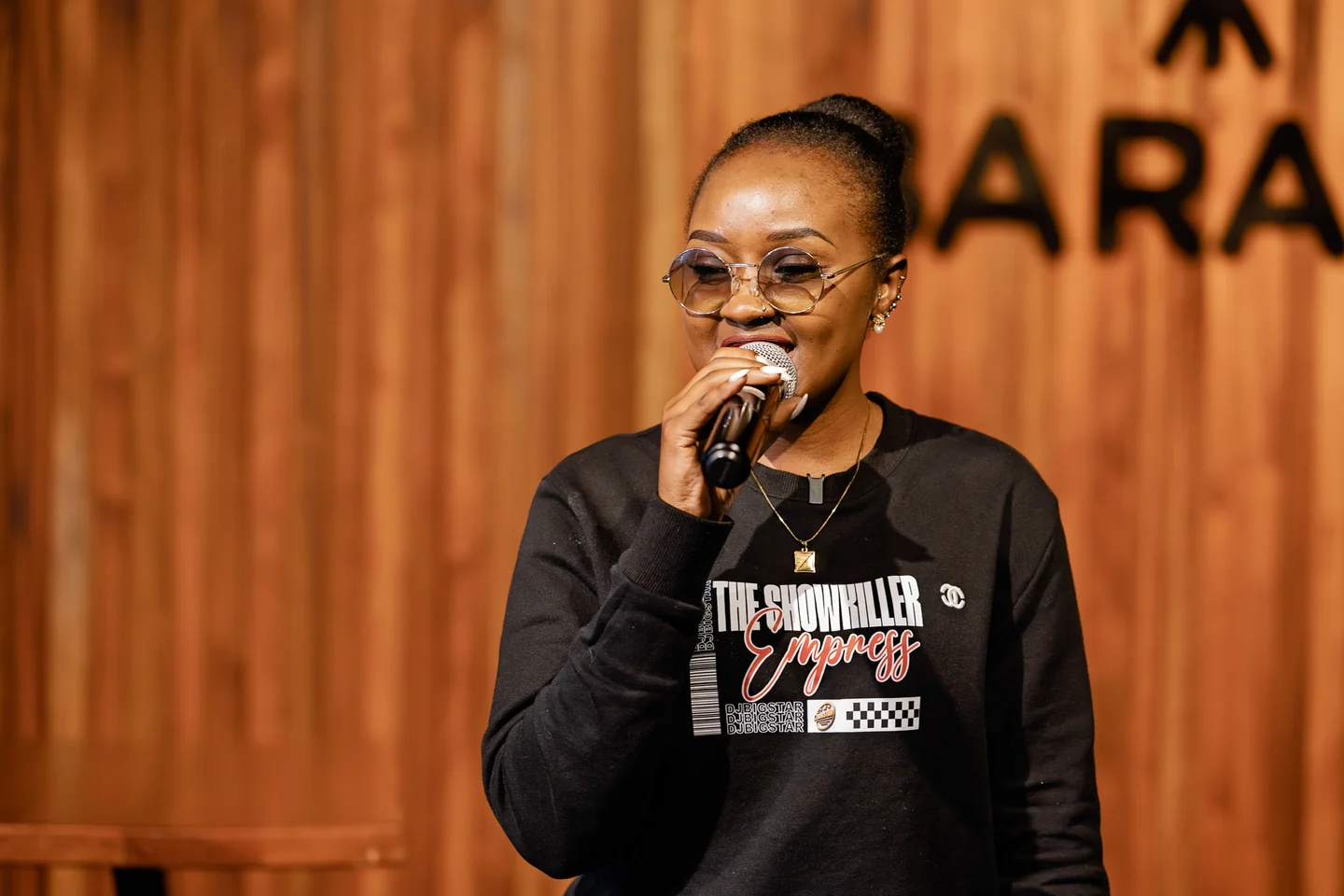
“I’m nervous. But I’m happy to be here, by the way.”
The recording starts with Agger already at the microphone, so whatever the MC said about her is lost. For everyone after her it survives. At Baraza Media Lab on 27 October 2025, each finalist of It’s Her Turn was introduced twice: first by a biography read out from a script, then by herself. Kikuyu Love Sessions had launched the campaign with one prize and finished it with six. The boxes were stacked by the banner, one set for each woman: a controller, studio monitors, headphones. The speeches were the kind every handover asks for. Thank the organisers, thank the funders, thank the room.
Agger does it properly, and fast. “I got to hear about this campaign through my friend. And I tried it, and here we are today.” She thanks Kikuyu Love Sessions “for being a part of changing the narrative for female DJs. We really needed that, and we appreciate it so much, so so much, we don’t even know.” She thanks Pam, at HEVA, for the DM, and Allan for replying to it. Then, still inside the thank-you: “We just need a little bit of push and support, which you have gladly given to us.”
The CV and the friend
Nadia’s biography is a business card. Twenty-five; professional DJ and entrepreneur; weddings, luxury clubs, corporate events; a company doing sound, décor and planning. Then she takes the microphone.
“Hi everyone. I don’t know why I’m shy.”
The script credited her career to her. She credits her entry to someone else. “I’m not actually the one who saw it. It’s my friend. She’s called Violet, and she knows that I’ve been pushing. I’ve been pushing.” She tells a room full of people with brands what they already know, “how getting that confidence, getting someone to believe in you, and getting someone to see your vision - it gets so hard,” and she puts on the record a fact the funders’ announcement didn’t carry. The mixes that decided the contest were recorded “without charging us anything, by the way.”
The question
Racey’s biography is the most respectable of the afternoon: a diploma in journalism and media communication, a DJ academy, a career that officially began in 2021, appearances on major platforms. Her own introduction starts somewhere the script wouldn’t go. She began with no machine, she says. There was a day she was due on air at Mediamax at six with no laptop, standing in town waiting for one to arrive while the producer rang to ask where she was. People call it a hobby. “But to me, it’s a career, because that’s what pays my bills.”
Then she stops thanking and asks.
Most of it comes in Kiswahili, fast, and it’s about money. You get a gig and you don’t know what to charge. Someone offers ten thousand and you go down to five, or you’re offered a hundred thousand and don’t know where to begin. If there’s one thing she wants from the people who funded the boxes, it’s that.
It’s the only question put to the funders all afternoon.
Short words
BigStar’s script gives her an age, twenty-six, and a list: Afrobeats, Amapiano, reggae, gospel; clubs, concerts, weddings, corporate events; “pure energy to every stage she steps on.” She comes up in a black sweatshirt that says THE SHOWKILLER, with Empress in red script beneath it, and corrects the brief before she’s begun.
“Let me say, I’m a woman of very short words, but not -”
She leaves it there. She’s glad, she says, that the organisers “didn’t give up on us, regardless.” She bigs up the partners for empowering “the female fraternity.” Then: “Start to push. I know this is just a beginning of something great.”
The plain version
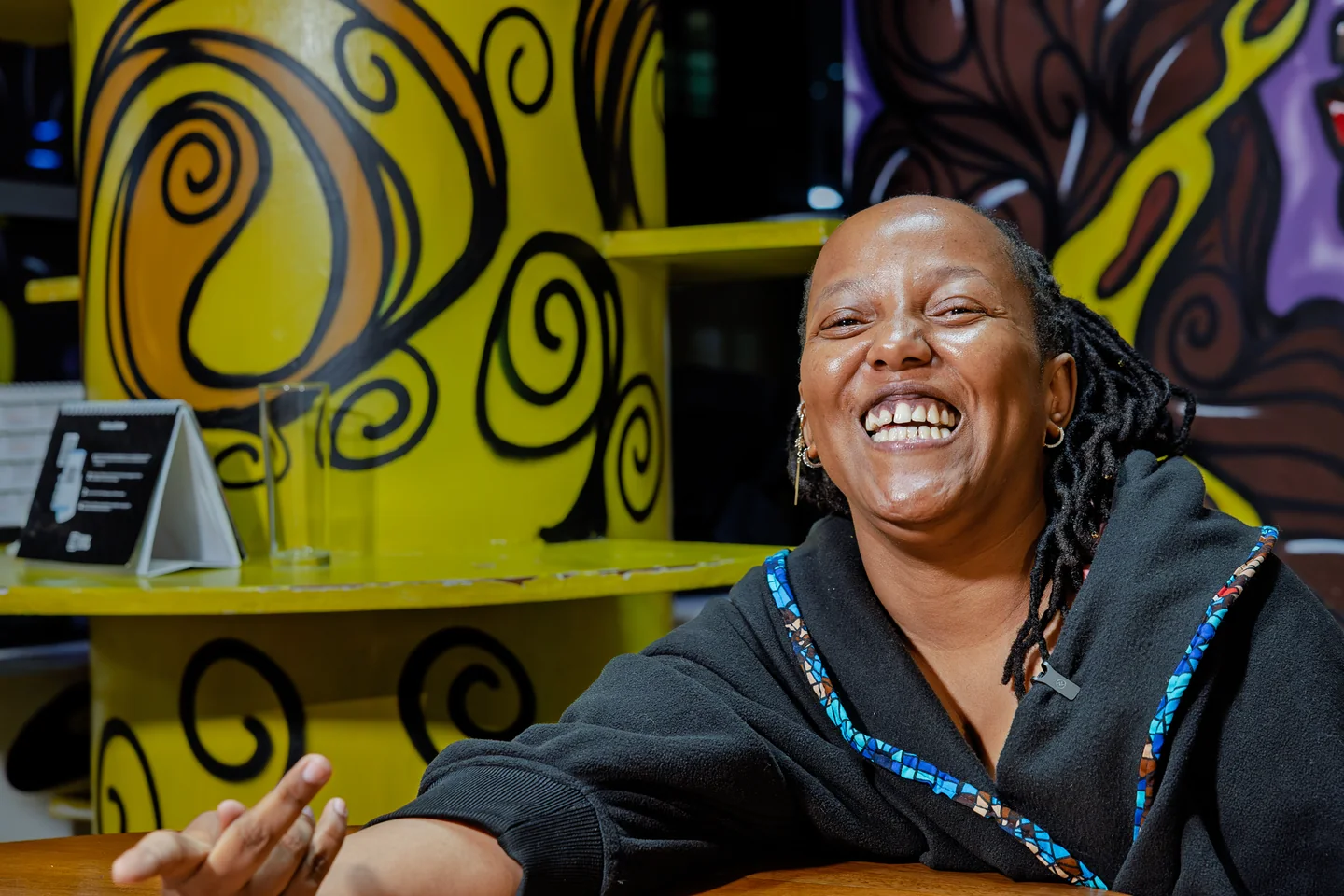
Jacy’s biography is the longest of the six. Radio stations; countless Nairobi clubs and events; event management, media shows; a background in cabin crew training, commercial modelling and brand influencing. She answers none of it. She thanks God first. “First and foremost is to thank God for the opportunity that he gave us. To meet you guys and to know you.” Then the organisers, then the sponsors.
Then, half in Kiswahili, she says it more plainly than anyone has. Being women is a plus. What they lack is a push, the kind that could take them a long way, if they can get it. “We’ll get there.”
Afterwards, in her interview, asked what the new kit will change for her: “It will help. But for me, I have my own. I have my own machine.”
The last introduction
The MC saves Wiwa for last because, the script says, she’s “absolutely inspiring.” The script names a disability and says she “did not let disability hold her back.” It lists summits and awards. It ends, “And when it’s her turn, the world listens.”
Wiwa brings her own introduction. The person beside her, who repeats her words for anyone in the room who doesn’t yet know her voice, sets it out: “She speaks, I echo.”
She found the campaign on a Sunday, she says, scrolling Instagram, applied, and forgot she had. She’s a corporate DJ now, “because corporate want inclusion.” “Then I show them that I can. And do it better with my feet.”
Two machines
When the speeches finish, they play.
At the long window, with the city behind her, BigStar works the new controller with her fingertips, its box open on the table beside her. On the floor nearby, Wiwa plays the controller she came with, an older one in a flight case, its jog wheels covered with stickers of her own bare feet on decks. One foot on the laptop, one on the mixer, her hands in the air.
Sanara is a Mastercard Foundation programme delivered in partnership with HEVA Fund, SNDBX-Ubuntu, Baraza Media Lab and GoDown Arts Centre.