
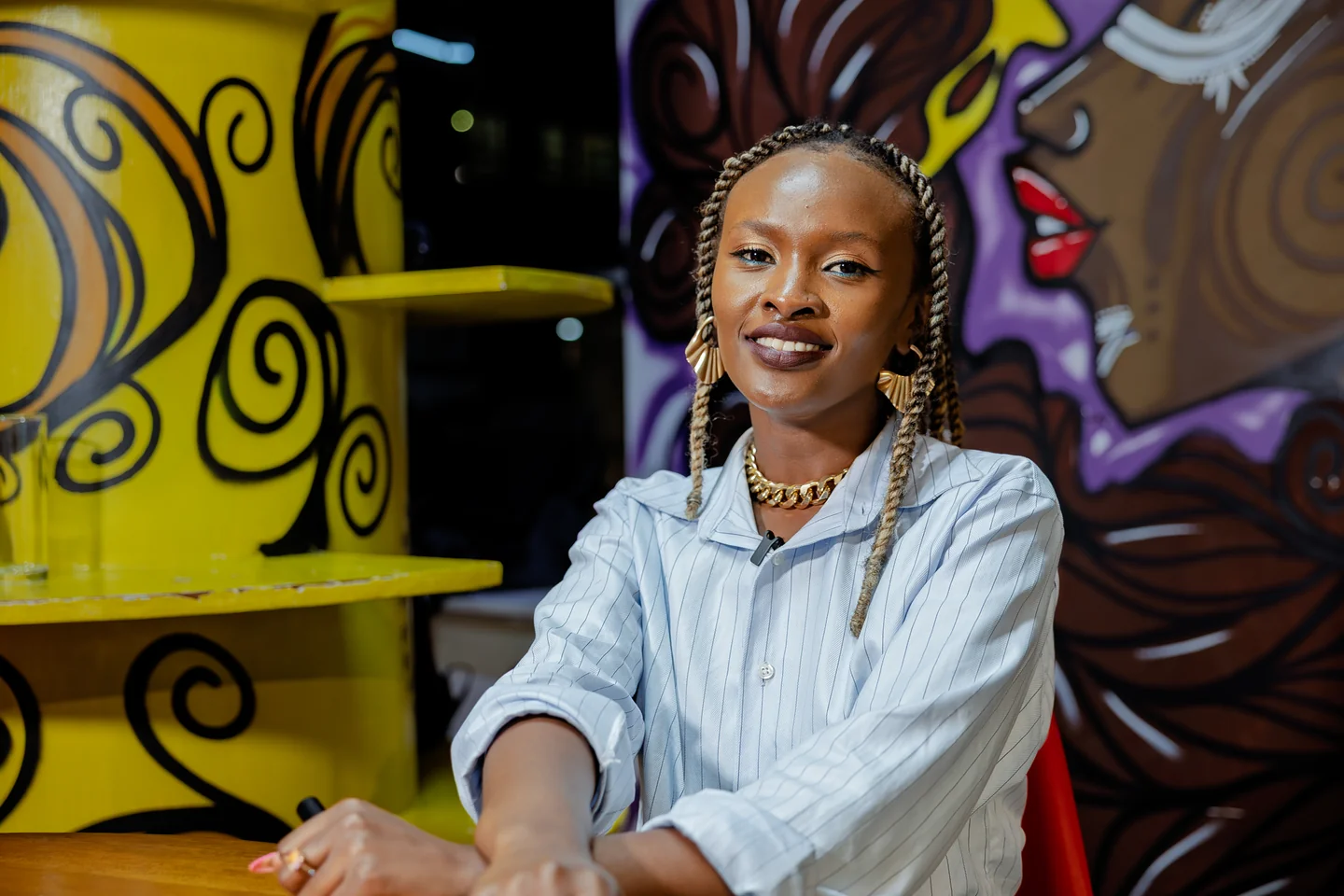
“My friend told me Kikuyu Love Sessions are looking for a DJ. They actually never told me it's a competition. So for me, I went there thinking it's a gig. I want a job.”
DJ Agger had been working for two years when the message reached her. What she'd actually been sent was It's Her Turn, a campaign Kikuyu Love Sessions ran in August and September 2025 to put women vernacular DJs in front of the promoters who fill the circuit's line-ups. She found out it was a competition, and entered anyway. “This is something I have to try because if I don't, I might regret it.”
Six women became finalists. Allan Gitau, who founded KLS, and he'd noticed that the new vernacular shows springing up for a young audience were booking “all the same faces, especially DJs,” and that the faces were men. The campaign was meant to give curators a bigger pool.
“When we were starting It's Her Turn, many of these girls did not even know each other.”
How the call travelled
The announcement went out publicly. Mostly, it reached its finalists through somebody else.
DJ Jacy was tagged in it before she'd decided anything. “Actually, when they posted, I really got a lot of mentions from that post. So I was like, okay, so what do we do from here?” Then a friend made it personal. “A friend of mine, who also happens to be a DJ, sent me the screenshot. Akaniambia, go try this thing.”
Nadia the DJ, in Nanyuki, had never heard of KLS. A friend who'd been to the sessions came into her inbox. “Huyu alikuja tu inbox and then she's like, Nadia, you should try this. We are doing this. I don't know, but you are taking this home.” A nightlife page in Nyeri forwarded the call too. “I don't know who is behind that page, but he or she believed in me.”
DJ BigStar's came from a stranger in Nakuru. At an event at Afraha, someone tapped her on the shoulder to say he liked her TikTok, and she didn't give him her number, “because this is a dude. First time meeting like, yeah.” He found her anyway. “Hello Bigstar, my name is so and so. There's something I would like you to try. It's like a competition. I was like, oh, and who are you again?”
DJ Racey had the posters in her inbox and turned them down. “Me and competition and Kikuyu, no, I'm not doing this.” Then another DJ called. “And when you see a DJ telling you you can do this and you are like, okay. Let me apply.” She recorded her entry at two in the morning, coming home from a gig.
DJ Wiwa saw it herself. She follows KLS on Instagram. Why did she apply? Two answers, relayed by the interpreter who works beside her.
“I am ambitious.”
“I love to try new things.”
Who they were already
BigStar had practised before she had decks, turning plates at the sink in Nakuru the way she'd seen DJs work the platters, then paid for a three-month course herself and turned up on the first morning at “eight on the dot.” She was a year into the craft. Jacy had left a job as cabin crew for a DJ academy in 2018, and gone solo during Covid. Nadia had talked her way into a nightclub booth two weeks after she started. “How long have you been DJing? Only two weeks, but I can do my best.” Agger had a degree in journalism first, because her parents made it the condition, and two years of gigs after it. Racey had a journalism diploma too, a DJ course cut short by COVID, and a weekday residency that paid for her own decks.
Wiwa mixes with her feet, from a seat above equipment placed on the ground. When she finished her training, the clubs wouldn't move their decks. “Everywhere I went, the clubs, they said, ‘No, our decks or machines cannot be put on the floor.’” Other DJs gave her a set of her own. “For me, that was a welcome to the industry.”
They'd been taught, mostly, by each other. “I have female DJs who have been in the game,” Agger says. “So they have taught me how to navigate DJing, how to do marketing, who to talk to, how to present myself, my social media, everything.”
One prize, then six
KLS launched the campaign with a prize it couldn't yet pay for: one winner, a slot on its stage, a DJ kit and mentorship. Then HEVA Fund took note. Through its Starter Kit Grants, every finalist received a professional DJ starter kit, and Sanara's partners turned the mentorship into a business course on branding, legal matters and contracts. The KLS slot was still to go to whichever finalist's recorded mix drew the most views.
For Agger, the mix mattered as much as the gear. “I'd never uploaded a mix. That was my first mix.” “For me, it means the next step... So now with the starter kit, that's a whole new level unlocked. I'm hoping to improve my skills because now I have everything that I need. So I must improve my skills. So no sleeping from now on.”
Nadia had a list before anyone gave her anything. Every month she writes down the bookings she has and the equipment she lacks. “The equipment I've been given, like 100% of it, I needed it. I really needed it to push my brand.” Until then, she'd hired. “Now, imagine, I'm not hiring yet again. I'm not.”
Wiwa's decks were going back to the repairer. “Because after every six months, I have to take it for repair.” Then: “Now I see God works in many ways.”
BigStar heard it as an opening. “I think that is a door of new opportunities opened for me.” She wanted the season. “Kwanza I'm hoping for very, very, very many gigs. Kwanza this time, yeah, festivities. November, December.”
For Racey, the kit removed an answer. “I won't give an excuse when somebody calls me for a gig: I don't have a machine, I don't have a laptop, I don't have this.”
And Jacy?
“Personally me, at some point, it will help. But for me, I have my own. I have my own machine.”
“With the ones that I have, of course, I'll use them and, yeah, I appreciate it.”
What a kit doesn't reach
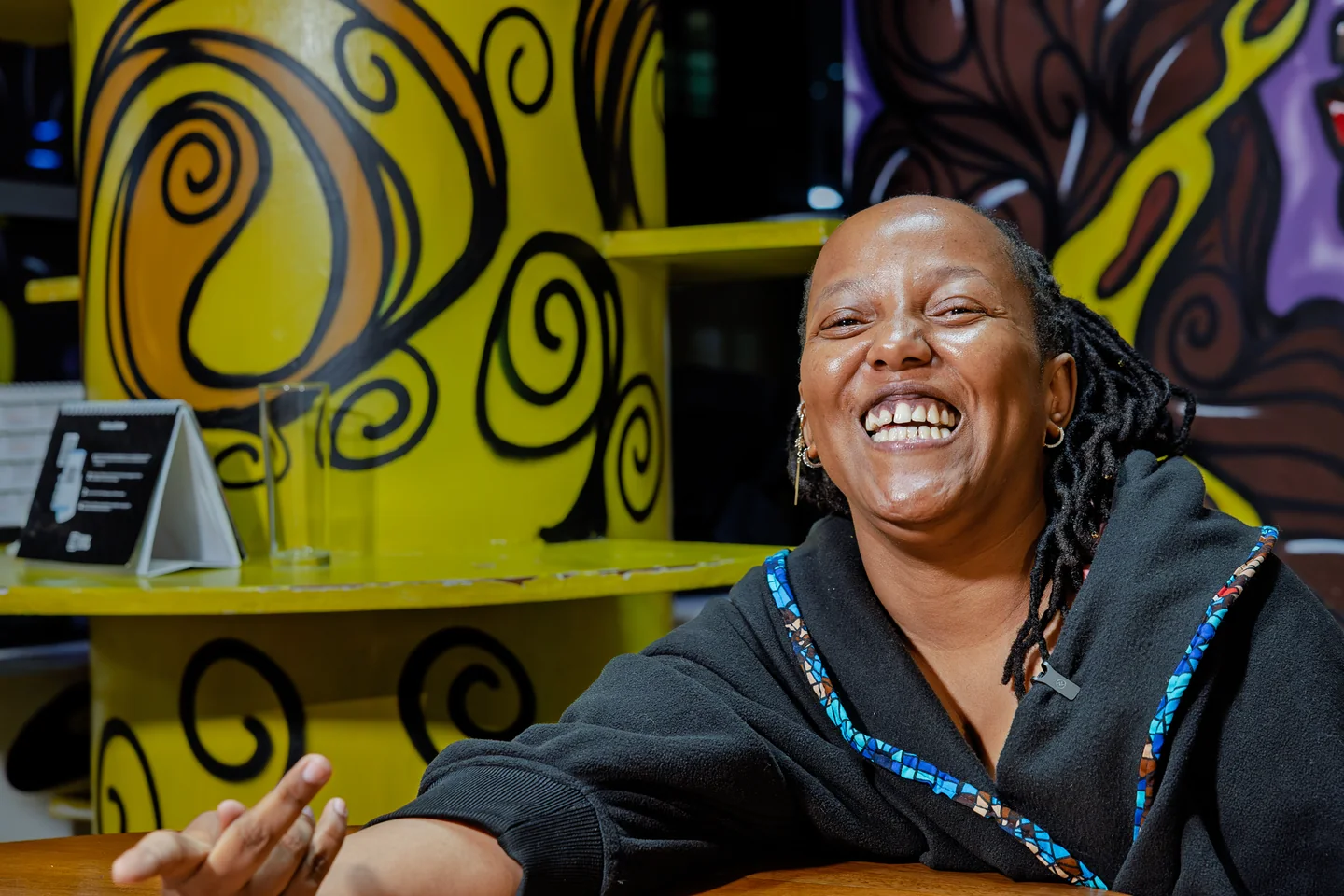
Jacy knows how new DJs get paid. “You'll get free gigs a lot. Someone will tell you, oh, you never know who will see you there.” Then the gigs that are agreed as paid. “From gigs that are paying but now they don't pay you on time ama they don't even pay you. Pesa inapotea tu hivyo.” Then the turn. “And then you get to a point now where now they are the ones who are calling you. So of course, ukiitwa, unalipwa.”
Agger knows where the doors close. “The male DJs, some of them don't believe that a female DJ can actually do a good job. So even when you go and ask for a job and you find those kind of DJs who are not very open-minded, they will maybe deny you a chance that would have changed your life or changed your career.”
Nadia was in Nanyuki. “At times I had to come from Nanyuki. There's a day we had to meet as a group. So, everyone is from Nairobi and I'm from Nanyuki and, gosh, is it? Is it really this hard? I need to wake up early, attend meetings, shoots.”
And Wiwa told The Standard, in December 2024, about another kind of booking. “At times I am hired to perform in an event and they bring a backup or support DJ,” one “who has no disability yet I end up performing longer” - “because I have good experience and grasp of instruments and am later paid less”.
Allan says he's heard the finalists' bookings have gone up since the mixes went out. “When we book them for gigs, we would like to be as competitive as other shows that are sponsored, you know. We would like to pay rates that are just as good.” A second round of the campaign is planned. “We need many, many more DJs.”
Conquer them
And to other women starting out?
“Just know that the industry is not soft for us female DJs,” Jacy says. “So you have to be very, very courageous and also you have to have discipline.” Agger adds the timing. “People think you'll start DJing today and you will be on the big platforms tomorrow. It doesn't happen overnight... At some point you're going to feel like giving up, but don't. Because it's going to get better.”
Then Agger again.
“You have to conquer them because we have and other females have. So you've got all it takes to do that.”
Sanara is a Mastercard Foundation programme delivered in partnership with HEVA Fund, SNDBX-Ubuntu, Baraza Media Lab and GoDown Arts Centre.