
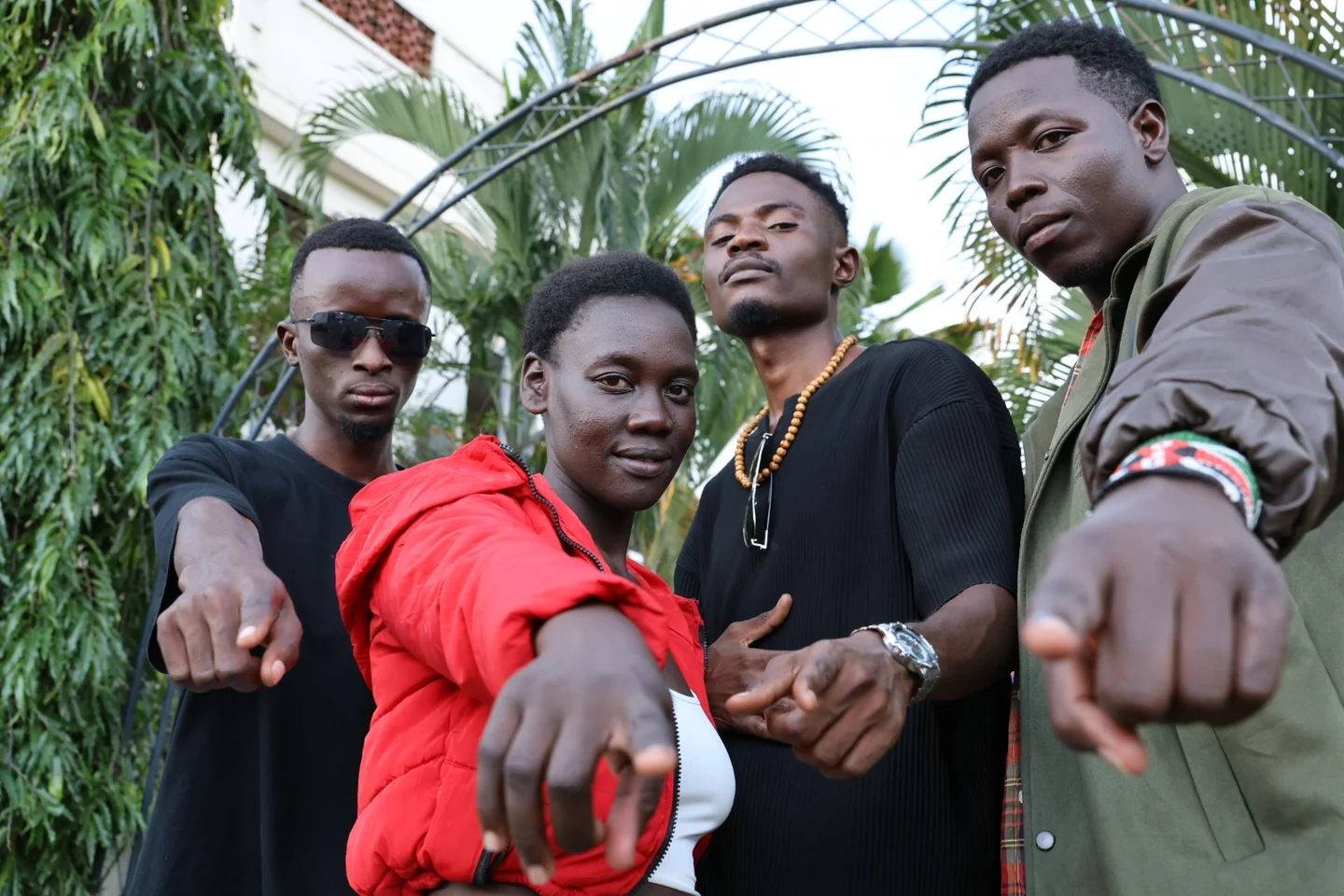
“Tusingekuja hapa, hatungejua those songs are being registered without us knowing, without our consent. Because the person paid for the studio, ana-own the song. Na ni sisi ndio tumeandika, tukasing.”
After their Sanara training in Kisumu, the Songbirds decided to register their songs. They tried the first one, they say, and found it already registered to someone else.
They'd been in a community-based organisation they trusted. “Tukijua hiyo ndio bridge yetu. Hiyo ndio daraja, eh?” The classes made them look again. “So you start questioning whatever you have been doing. Are we doing it the right way?”
“Are we legal?”
Like a house
June Masimoni, a vocalist trained at the Kenya Society for the Blind, explains it the way you'd explain a front door.
“It's like ukuwe na kwako kwa nyumba, kwako nyumbani. You will not allow a stranger akuje ku-invade ama aingie kwako bila ruhusa. Of course, utamuliza, ‘Why are you doing this?’”
The Kenya Copyright Board's own guidance is that copyright is vested in a work once it's in a concrete form, with no need to register. Registration is voluntary, but the certificate is the evidence of ownership if there's a dispute. Since April 2020 it's been done online, through the National Rights Registry, for a fee of a hundred shillings for an individual. Two years after the registry opened, the board counted 40,000 registrations, 70 per cent of them sound recordings, music and spoken word.
The help that arrives without paper
One of the Songbirds described it from experience.
“Msee amekulipia studio, amekulipia video, but hakuna agreement umefanya na huyo msee.”
The song travels; somebody else collects. “Unaskika Nairobi, unaskika Eldi. Inasonga, but mfuko hazi.”
In Kakuma, Gerrard Aoci's arrangement was warmer and just as unwritten. For years he worked with a team that felt like family. Then his YouTube channel was hacked, and he went looking for what had been agreed.
“There was no clear paperwork on how we are working.”
He ended it, with the help of a law coach from the training. That, in his phrase, was the day Lastic Records was officially born.
“It was not in a bad way. I just felt like working as a family kind of put some laziness. I decided, no, I need to work me as me.”
Do you have things written down?
Diana Kimwaki had built her whole practice on swapping skills with friends: she'd sing, they'd produce, design or photograph. The legal day of her business training asked her to look at it.
“Have you thought about how your collaborations are working? Because that's what I'm doing. I'm collaborating with other creatives, but how do those collaborations work? Do you have things written down?”
She'd gone into the training expecting to hear what she could have looked up. What she wanted was the knowledge nobody publishes.
“As everyone says, we don't have a music industry. We just have things that work, but we don't really understand the in-between, and you will not find this information because it is very, very well gate-kept.”
There's money in it, too. “There's a lot of money there that is going to waste because people don't know that money is there.”
When to sign
Madelynn Nafula, a model in Mombasa, counted off what the training gave her.
“After the training, I know my rights. I know when to sign a contract and when not to sign a contract. And I know how to market myself.”
Had she been wronged before?
“A lot. Nimefanyiwa mbaya mingi.”
Jacinta Wambua had studied music before she ever reached KSB. What she hadn't been taught there was the paperwork. “You need to put in work. You need to get your things registered.”
Ku-own muziki yako
“As long as ushajua your rights za on your music and how to own your music, eh, music inaweza lipa. It can pay because umejua rights zako na huwezi allow mtu mwingine ku-invade,” June says.
“Now we work like adults,” say the Songbirds. “We work as adults, legally.”
Sanara is a Mastercard Foundation programme delivered in partnership with HEVA Fund, SNDBX-Ubuntu, Baraza Media Lab and GoDown Arts Centre.