
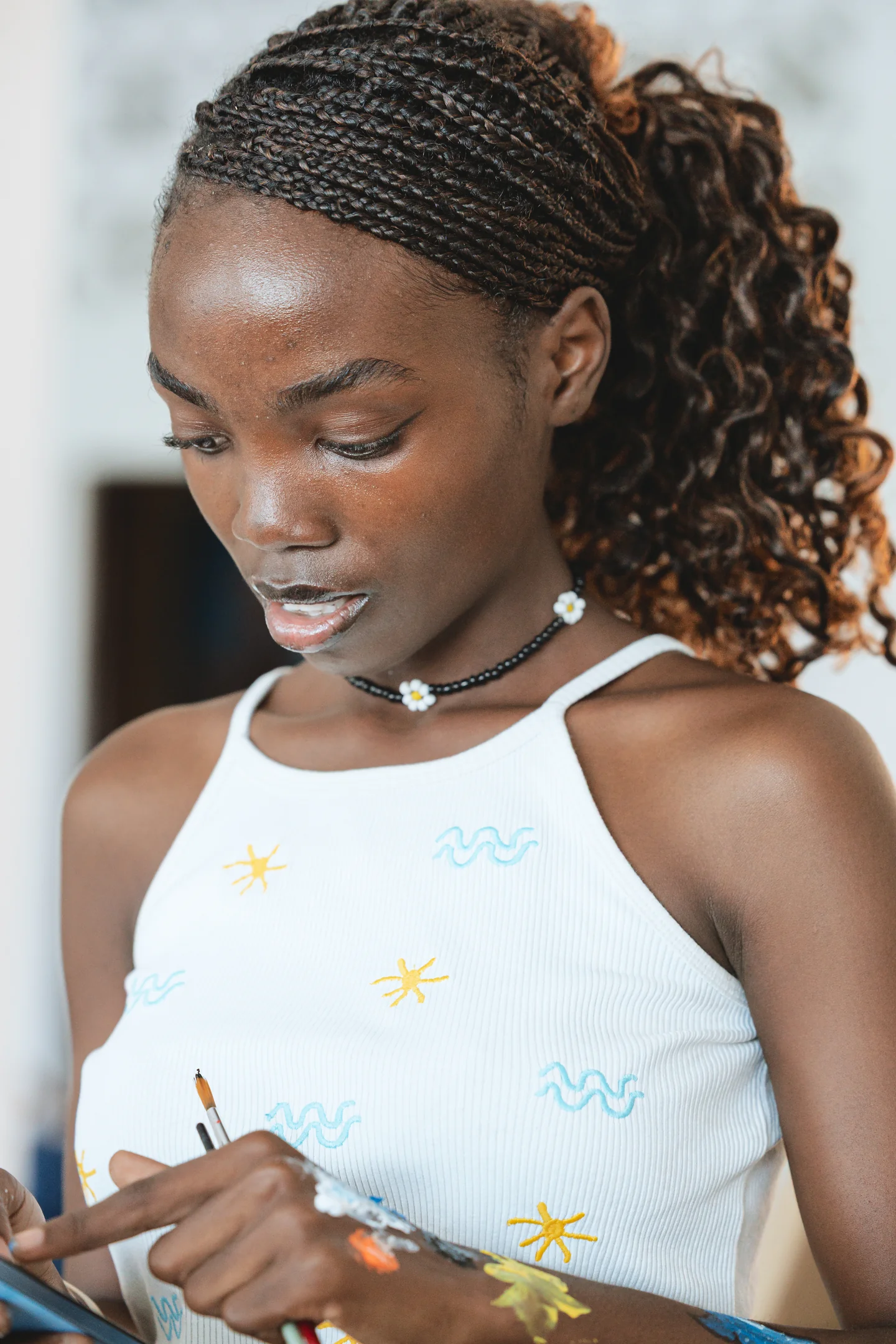
“There were not enough students, so she told me, so you join Sanara? I was like, what is Sanara?”
That's Grace Lavina, the face painter and artist, on graduation day in Mombasa, 20 June 2025. A friend's training class had been short of numbers.
When the Aga Khan University's East Africa Institute surveyed more than 9,000 young Kenyans and their employers, it found that about half of young people in formal entry-level jobs, and about six in ten in informal ones, had been recruited through referrals and social networks. A quarter of the formal hires, and fewer than one in ten of the informal ones, came through an advertisement.
A friend
Said Yassin was one of the earliest to join Ghetto Classics, the music programme he came through.
“I heard from a friend about Ghetto Classics, and the friend plays the trumpet. I was really curious, because I'd started guitar lessons but only knew a few chords.”
“He said, ‘We have trainings on weekends.’ I was like, why not see if I can join? He said, ‘Yeah, sure.’ And that's how I found myself joining.”
Madelynn Nafula's way into modelling went through a friend who modelled. Before she ever walked, she held the phone.
“Every time she went for training, she'd say, ‘Madi, come, let's go.’ And every time, I was the one taking videos of her. And I thought, if she can do it, how will I fail?”
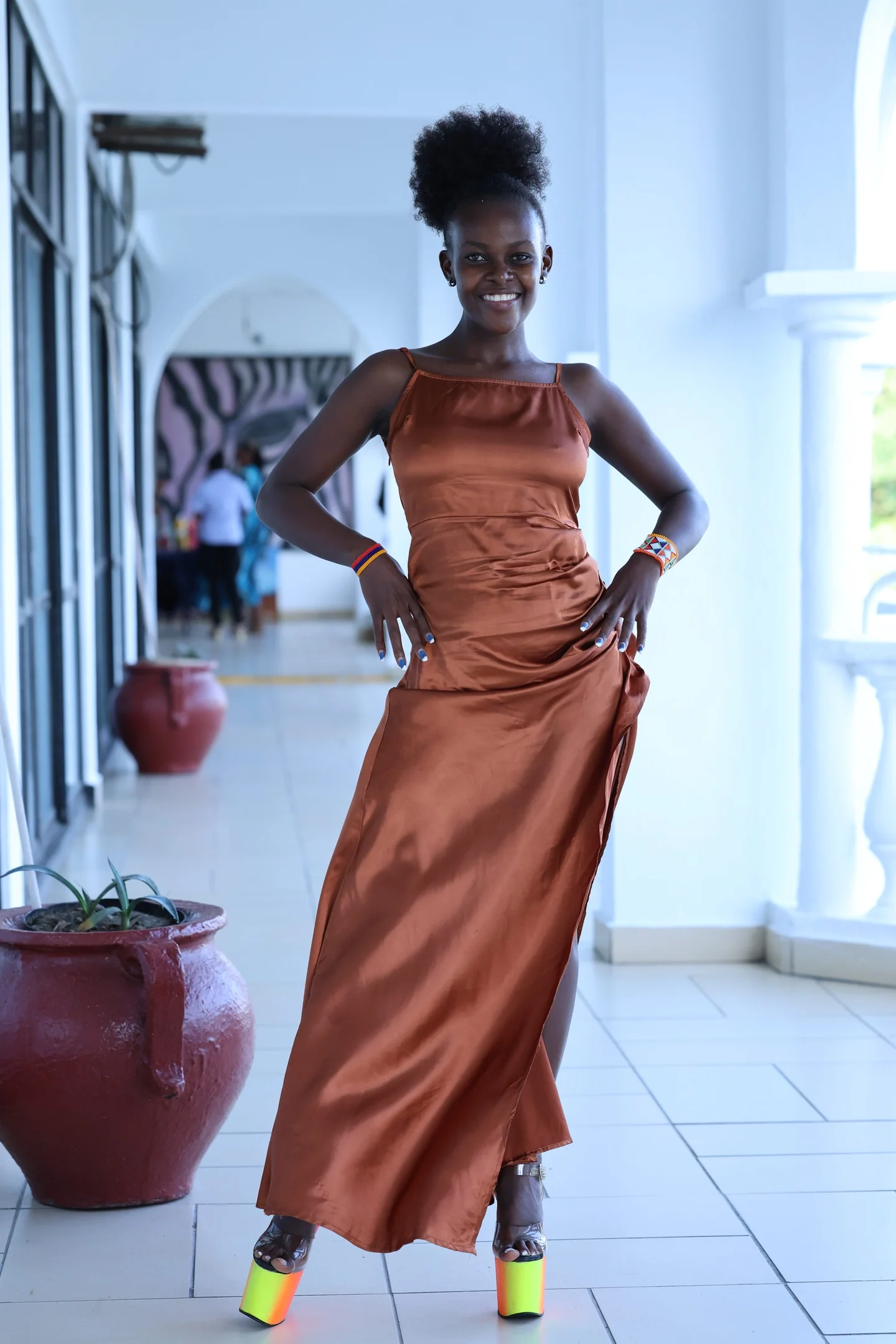
It was a friend, too, who brought her to Sanara. “She called me and said, ‘You can come and showcase your modelling as your creativity.’ And I was like, why not? And here I am.”
At the Kenya Society for the Blind in Nairobi, Jacinta Wambua didn't sign herself up. “He signed me up. So I was called, we came, auditioned, and then they picked us for training. It was that easy.”
Marion Akoth Adera had left KSB after rehabilitation. KSB came back for her. “Being that I was an all-round student, I would say so, they contacted me to ask if I was interested, and then I had to come back for that.”
The screenshot
When Kikuyu Love Sessions opened It's Her Turn at the end of August 2025, its campaign for women vernacular DJs, the announcement went out publicly. Most of the women who became finalists heard it from someone else.
DJ Agger thought it was a booking. “My friend told me Kikuyu Love Sessions are looking for a DJ. They actually never told me it's a competition. So for me, I went there thinking it's a gig. I want a job.”
DJ Jacy was tagged before she'd decided anything, and then a friend made it personal. “A friend of mine, who also happens to be a DJ, sent me the screenshot. Akaniambia, go try this thing.”
Nadia the DJ, in Nanyuki, had never heard of KLS. “Huyu alikuja tu inbox and then she's like, Nadia, you should try this. We are doing this. I don't know, but you are taking this home.” A nightlife page in Nyeri forwarded it too. “I don't know who is behind that page, but he or she believed in me.”
DJ BigStar's came from a man in Nakuru who'd tapped her on the shoulder at an event to say he liked her TikTok. She didn't give him her number, “because this is a dude. First time meeting like, yeah.” He found her anyway.
“Hello Bigstar, my name is so and so. There's something I would like you to try. It's like a competition. I was like, oh, and who are you again?”
The phone call
After the KSB auditions, Emmanuel Ogeto's band came through the same route. “Sasa nikastukia tu nimepigiwa tu simu, kwa sababu nilipigiwa pia na mtu mwenye najua na anajua kazi yangu. So akaniambia, ‘Tunataka kuform band.’ Yeah, na mimi nikaingia tu.”
Jacinta's first paid booking happened in a single day. A friend rang one morning with a Rotary installation that needed a musician. “We want you. We are looking for a musician. Can you come?” By the afternoon she'd found a keyboardist.
Nadia got her first booth two weeks into the craft, because a friend introduced her to the man who ran the club. DJ Agger learned to run her career from women who'd gone before her. “So they have taught me how to navigate DJing, how to do marketing, who to talk to, how to present myself, my social media, everything.”
Diana Kimwaki built a whole way of working on it.
“I have friends who are graphic designers, I have friends who are photographers, I have friends who are producers, I have friends who are in different niches across the creative industry. At which point I realised, ‘Oh, I can do this.'”
Before there were any
Gerrard Aoci arrived in Kakuma from the Democratic Republic of Congo in 2011 with no English and nobody to speak to.
“You have no friends, obviously. Your only friends are your family and you cannot stay with your family. You have to go to school. So you just feel like you're alone.”
Then a boy called Lual, from South Sudan, who spoke Kiswahili.
“So with Lual, it was now simple for me to communicate, and he made me understand some basic stuff in class, some subjects and we kept on studying together and I started performing well. Actually, I was position one.”
Damackline Oginda, singing in a Kibera choir she couldn't afford the uniform for, had no one.
“I didn't have any support from both the family and friends.”
Sanara is a Mastercard Foundation programme delivered in partnership with HEVA Fund, SNDBX-Ubuntu, Baraza Media Lab and GoDown Arts Centre.